Lab-Grown Meat: The Science, the Hype, and What We Actually Know
(A Dietitian Unpacks Cultivated Meat, So You Don't Have To Decode a Research Paper)
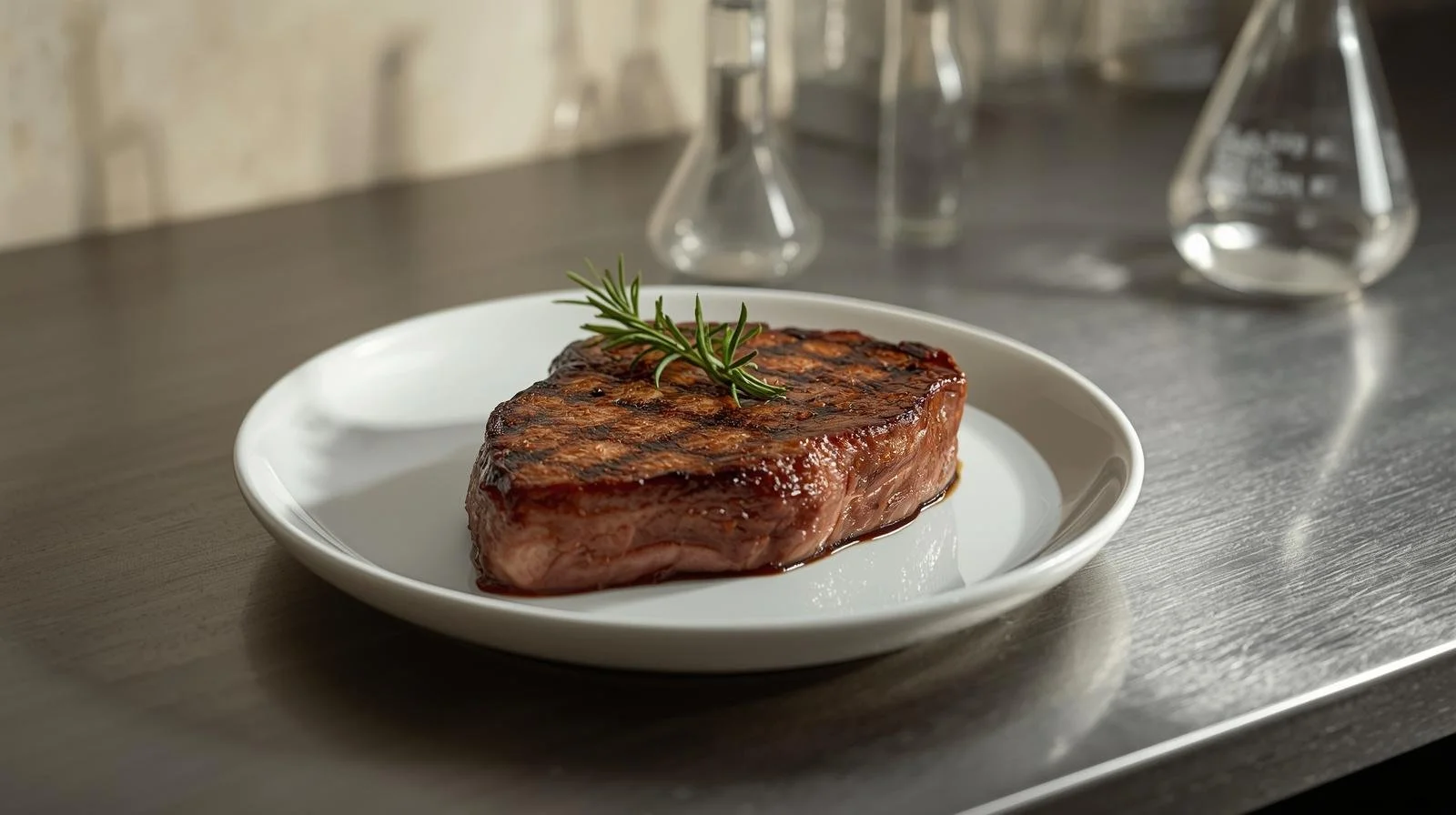
Let's talk about lab-grown meat. Also called cultivated meat, cultured meat, cell-based meat, and about fifteen other names that each sound slightly more like a sci-fi movie title than the last.
Whether you've seen the headlines and thought "wait, that's a thing now?" or you've been quietly Googling "is lab-grown meat safe" at 11pm — this post is for you. My job here is not to sell you on it, not to scare you away from it, and definitely not to overstate what we currently know. My job is to give you the actual science, translated into something useful.
Let's start at the beginning.
Cultivated meat is real animal meat. It just skipped the part where the whole animal was involved.
So, What Actually Is Cultivated Meat?
Cultivated meat (we'll use that term throughout, since it's the most scientifically accurate and least panic-inducing) is genuine animal-derived meat produced by growing animal cells in a controlled environment — a bioreactor — rather than by raising and slaughtering livestock. The end product is biological animal tissue. Not a plant-based substitute, not a mycoprotein. Actual muscle and fat cells from an animal. (GFI, 2021; Gu et al., 2025)
The concept moved from science fiction to reality in 2013 when Dutch researcher Mark Post unveiled the world's first cell-cultured burger on live television. The price tag? A casual $300,000 USD for one patty. (Don't worry, they've come down a bit since then.) As of 2024, over 150 companies worldwide are working on cultivated meat products, and the industry has attracted more than $3.1 billion in investment since 2013. (Gu et al., 2025; GFI State of the Industry, 2024)
Two companies — GOOD Meat and UPSIDE Foods — received U.S. regulatory approval to sell cultivated chicken in 2023, making the United States one of only a handful of countries where these products can be commercially sold. Singapore, Hong Kong, and Israel have also approved certain products. (CRS Report, 2023; MOST Policy Initiative, 2024)
How Is Cultivated Meat Actually Made?
Here's your crash course in cellular agriculture. The process has four core stages, and each one is genuinely fascinating (and slightly mind-bending):
Step 1: Cell Sourcing
It starts with a small biopsy from a living animal — typically muscle tissue. Scientists then isolate the muscle precursor cells (often called satellite cells, myoblasts, or pluripotent stem cells), screen them for their ability to grow well, and create what's called a "master cell bank" — a stable supply of starter cells that can be used for future cultivation. No harm to the animal is required for this step, and the cells can theoretically be used indefinitely from that initial biopsy. (Reiss et al., 2021; GFI, 2021)
Step 2: Culture Medium
The isolated cells need nutrition to grow and multiply. They're placed in a liquid medium that provides amino acids, glucose, vitamins, minerals, and growth factors — essentially a nutrient bath that mimics what the cells would experience inside an animal's body. (GFI, 2021; Gu et al., 2025)
Here's where things get interesting from both an ethical and a practical standpoint: the gold standard culture medium for decades has been fetal bovine serum (FBS) — serum derived from fetal calf blood. This creates an obvious paradox for a product positioned around reduced animal use. The industry is actively working to replace FBS with serum-free, animal-component-free alternatives, and several companies have made significant progress. This remains one of the field's biggest technical and ethical hurdles. (Demarquoy, 2025; Gu et al., 2025; Powell et al., 2025)
Step 3: Bioreactor Expansion
Once the cells are growing, they're transferred into large bioreactors — essentially sophisticated, controlled tanks — where they multiply at scale. Think of a bioreactor as a very high-tech fermentation vessel with precise control over oxygen levels, pH, temperature, and nutrient delivery. Different types of bioreactors are used for different stages and cell types. This step is the major cost bottleneck and where most of the engineering innovation is currently focused. (Gu et al., 2025)
Step 4: Scaffolding and Differentiation
Once enough cells exist, scientists trigger them to differentiate — to mature from generic precursor cells into muscle, fat, and connective tissue. For unstructured products like mince or nuggets, this can happen relatively straightforwardly. For structured products like a steak or chicken breast, this is where it gets complicated: cells need a three-dimensional scaffold to organize themselves into something resembling actual meat architecture. (Reiss et al., 2021; GFI, 2021)
Scaffolding materials being explored include polysaccharides like chitosan, alginate, and cellulose; proteins like zein; and composites like textured vegetable protein. Some researchers are even exploring 3D bioprinting techniques. The "whole cut" problem (replicating a steak vs. a nugget) remains one of the field's biggest unsolved challenges. (GFI, 2021)
The entire process takes roughly two to eight weeks depending on the species and product type. (GFI, 2021)
The "whole cut" problem — getting a cultivated steak to look and taste like a steak — is still genuinely unsolved. For now, minced and ground products are the realistic near-term deliverables.
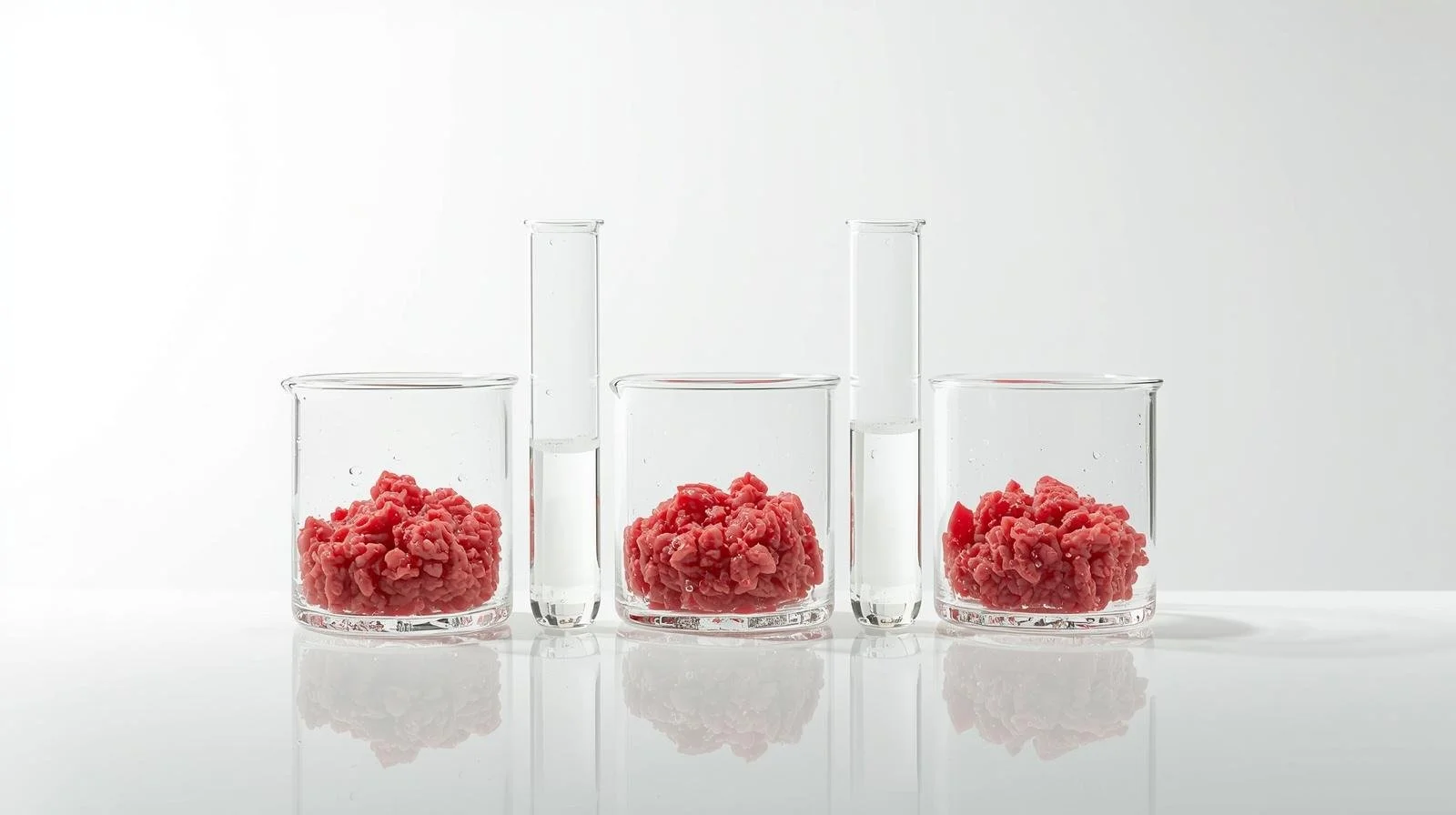
What's the Nutritional Profile?
Okay, here's where we get into the dietitian weeds — and where I need to be upfront about something important: the nutritional data on cultivated meat is still genuinely limited. There are very few prototypes that have been fully analyzed, and even fewer peer-reviewed papers with comprehensive nutritional composition data. What we have are theoretical projections and a small number of real-world measurements.(Lim et al., 2025; Fraeye et al., 2020)
With that caveat clearly stated, here's what the current evidence suggests:
Protein
Early studies comparing cultivated pork and chicken to their conventional counterparts show comparable protein levels. The amino acid profile of cultivated muscle cells should theoretically be similar to conventional meat since the cells are the same cell type.(Lim et al., 2025) However, at least one analysis of a commercially approved cultivated chicken product found lower protein and amino acid levels compared to conventional chicken, alongside differences in several vitamins. (Sikora & Rzymski, 2024)
The key takeaway: protein comparability is plausible but not yet consistently demonstrated across products. Formulation matters enormously, and products will vary.
Fat Profile
This is arguably where cultivated meat has the most interesting potential — and where the data is also most limited. In theory, fat composition can be actively modulated during the cultivation process. Researchers have demonstrated the ability to enrich cultivated fat with omega-3 fatty acids and reduce saturated fat content — modifications that could theoretically offer cardiovascular benefits compared to conventional meat. (Kardas et al., 2025)
In practice, the fat content of cultivated prototypes varies considerably, and at least one study found higher total fat in a commercial cultivated chicken product compared to conventional chicken. The "designer fat profile" remains largely theoretical at commercial scale. (Sikora & Rzymski, 2024; Lim et al., 2025)
Micronutrients: The Gaps to Watch
This is where things get nutritionally interesting — and where vigilance is warranted. Meat is a significant source of several nutrients that are either absent from or poorly produced by cultivated cells in isolation:
Vitamin B12: Not synthesized by mammalian cells. Must be added via fortification. (Demarquoy et al., 2025; Fraeye et al., 2020)
Heme iron: Conventional meat contains iron in the highly bioavailable heme form. Cultivated meat may require non-heme iron fortification, which has lower absorption. (Demarquoy et al., 2025)
Zinc and selenium: May require supplementation depending on cultivation conditions. (Demarquoy et al., 2025)
Taurine, creatine, and carnitine: Conditionally essential compounds naturally present in meat; their presence in cultivated products will depend on formulation. (Demarquoy et al., 2025; Fraeye et al., 2020)
Bottom line: cultivated meat products will likely require fortification strategies — similar to what plant-based alternatives already use — to deliver a nutritional profile comparable to conventional meat. Whether manufacturers will consistently and adequately fortify is a question worth monitoring. (Demarquoy et al., 2025; Kardas et al., 2025)
Vitamin B12, iron, zinc, and conditionally essential compounds like creatine will likely require deliberate fortification — this isn't a dealbreaker, but it is something to watch on labels.
What Are the Potential Health Benefits?
Let's be careful here — we're in the realm of potential and theoretical for most of this section. That said, here's what researchers are exploring:
Reduced pathogens: Conventional meat processing is a known vector for bacterial contamination (Salmonella, Listeria, E. coli). A controlled bioreactor environment theoretically reduces these exposure pathways. (Powell et al., 2025; MOST Policy Initiative, 2024)
Lower antibiotic use: Because the production environment is sterile rather than a farm, the need for preventive antibiotic use is eliminated — relevant given antibiotic resistance concerns. (Kardas et al., 2025)
Modifiable fat profile: As described above, the ability to engineer a healthier lipid profile is scientifically plausible and has been demonstrated in research settings. (Kardas et al., 2025)
Reduced exposure to carcinogens: Certain carcinogenic compounds found in processed and high-heat-cooked conventional meat (like heterocyclic amines and polycyclic aromatic hydrocarbons) may be reduced depending on how cultivated products are processed. (Kardas et al., 2025)
Again: these are hypothetical benefits based on the production process, not clinically demonstrated health outcomes. No long-term human health studies exist — because the products haven't been on the market long enough to generate them.
What Don't We Know? (The Honest Part)
This section might be the most important one — and it's the part that often gets glossed over in the breathless "future of food" coverage.
Long-Term Safety Data
No one has consumed cultivated meat regularly for decades, because it hasn't existed for decades. Long-term health data is simply unavailable. Regulatory bodies in the U.S. (FDA and USDA share oversight) and Singapore have reviewed and approved specific products as safe for consumption, but that review is based on the best available current evidence — not multi-decade longitudinal studies. (CRS Report, 2023; Gu, Li & Chan, 2023)
Culture Medium Residues
Growth factors, hormones, differentiation factors, and other components of the culture medium are used during production. Questions remain about residual levels of these compounds in the final product, how manufacturers monitor for and remove them, and whether they accumulate in ways that could matter for health. This isn't a documented risk — it's an area where standardized testing protocols and transparency are still developing. (Gu, Li & Chan, 2023)
The Fetal Bovine Serum Question
While the industry is actively transitioning away from FBS, some products still use it. FBS introduces potential for batch-to-batch variability, questions about viral contamination screening, and obvious ethical tensions for a product marketed partly on animal welfare grounds. The industry's progress toward serum-free media is real, but the transition isn't complete. (Demarquoy et al., 2025; Powell et al., 2025; Gu et al., 2025)
Comprehensive Nutritional Analysis
As noted above, full nutritional analysis data across different cultivated meat products and manufacturers is genuinely limited. We don't yet have the breadth of data needed to make confident, broad nutritional comparisons across the category. (Lim et al., 2025; Fraeye et al., 2020)
Allergenicity
Scaffolding materials — alginate, chitosan, plant proteins — may introduce new allergen exposure pathways. This is an area requiring ongoing research and transparent labeling. (Gu, Li & Chan, 2023)
Environmental Impact
This is outside the scope of nutrition, but worth noting for context: the environmental calculations for cultivated meat are more complex than early headlines suggested. While land use reductions are significant, the energy demands of bioreactor operations mean that the carbon footprint of cultivated meat may not be unambiguously lower than conventional meat — it depends heavily on the energy source used in production. (Gu et al., 2025)
The absence of long-term human health data isn't a red flag — it's simply reality for a new food technology. The honest answer is: we don't yet know everything, and that's okay to say.
The Regulatory Landscape (Yes, This Matters for Nutrition)
In the United States, cultivated meat is co-regulated by the FDA (which oversees cell collection, cell banking, and cell growth up to harvest) and the USDA (which takes over at the harvest and processing stage). Both GOOD Meat and UPSIDE Foods received regulatory clearance in 2023 after detailed premarket consultations. Singapore was the first country to authorize cultivated meat sales in 2020. Israel followed in 2024. (CRS Report, 2023; Gu et al., 2025)
Regulatory review does evaluate safety, but it doesn't guarantee nutritional equivalence to conventional meat — that's a separate standard that manufacturers are not uniformly required to meet. Label reading matters here.
The Nuanced Take (Because That's Why We're Here)
Cultivated meat is a genuinely novel food technology with legitimate scientific interest and real potential — both nutritionally and for food systems more broadly. It is not magic, and it is not poison. What it is, right now, is a product category in its infancy, with exciting theoretical potential and a data set that is still being built.
Here's what the evidence actually supports saying:
Protein content is likely comparable to conventional meat, though product variability exists. (Lim et al., 2025; Sikora & Rzymski, 2024)
Fat profile can theoretically be engineered to be more favorable, but commercial products aren't consistently demonstrating this yet. (Kardas et al., 2025; Sikora & Rzymski, 2024)
Micronutrient gaps are real and will require deliberate fortification; reading labels will matter. (Demarquoy et al., 2025)
Long-term health data does not yet exist. Regulatory approval ≠ multi-decade safety evidence.(Gu, Li & Chan, 2023)
The field is moving fast. What's true today about production methods, costs, and nutritional data may look quite different in five years.
What I won't do is tell you cultivated meat will revolutionize your health or that you should be alarmed by it. The nuanced truth — as always — is more interesting than either extreme.
References
1. Lim PY, Suntornnond R, Choudhury D. (2025). The nutritional paradigm of cultivated meat: Bridging science and sustainability. Trends in Food Science & Technology, 156, 104838. https://doi.org/10.1016/j.tifs.2024.104838
2. Kardas M, et al. (2025). Cultured Meat Reformulation: Health Potential and Sustainable Food Challenges — Narrative Review. Comprehensive Reviews in Food Science and Food Safety. https://doi.org/10.1111/1541-4337.70262
3. Fraeye I, Kratka M, Vandenburgh H, Thorrez L. (2020). Sensorial and Nutritional Aspects of Cultured Meat in Comparison to Traditional Meat: Much to Be Inferred. Frontiers in Nutrition, 7, 35. https://doi.org/10.3389/fnut.2020.00035
4. Sikora D, Rzymski P. (2024). Assessment of the potential nutritional value of cell-cultured chicken meat in light of European dietary recommendations. Journal of Food Composition and Analysis, 135, 106663. https://doi.org/10.1016/j.jfca.2024.106663
5. Demarquoy J, et al. (2025). Nutrient Equivalence of Plant-Based and Cultured Meat: Gaps, Bioavailability, and Health Perspectives. Nutrients, 17(24), 3860. https://doi.org/10.3390/nu17243860
6. Gu Y, Li X, Chan ECY. (2023). Risk assessment of cultured meat. Trends in Food Science & Technology, 138, 491–499. https://doi.org/10.1016/j.tifs.2023.06.037
7. Good Food Institute. (2024). State of the Industry Report: Cultivated Meat and Seafood. GFI. https://gfi.org/resource/cultivated-meat-and-seafood-state-of-the-industry-report/
8. Good Food Institute. (2021). The Science of Cultivated Meat. GFI. https://gfi.org/science/the-science-of-cultivated-meat/
9. Reiss, J., et al. (2021). Cell Sources for Cultivated Meat: Applications and Considerations throughout the Production Workflow. International journal of molecular sciences, 22(14), 7513. https://doi.org/10.3390/ijms22147513
10. Gu, H., Kong, Y., Huang, D., Wang, Y., Raghavan, V., & Wang, J. (2025). Scaling Cultured Meat: Challenges and Solutions for Affordable Mass Production. Comprehensive reviews in food science and food safety, 24(4), e70221. https://doi.org/10.1111/1541-4337.70221
11. Park, H., Cho, I., Heo, S., Han, K., Baek, Y. J., Sim, W. S., & Jeong, D. W. (2025). Metabolomic insights of cultured meat compared to conventional meat. Scientific reports, 15(1), 15668. https://doi.org/10.1038/s41598-025-00719-7
12. Powell, D. J., Li, D., Smith, B., & Chen, W. N. (2025). Cultivated meat microbiological safety considerations and practices. Comprehensive reviews in food science and food safety, 24(1), e70077. https://doi.org/10.1111/1541-4337.70077
13. MOST Policy Initiative. (2024). Cultivated Meat Science Note. https://mostpolicyinitiative.org/science-note/cultivated-meat/
14. U.S. Congress Research Service. (2023). Cell-Cultivated Meat: An Overview. (n.d.). [Legislation]. Retrieved March 13, 2026, from https://www.congress.gov/crs-product/R47697