Plant Hormones and Your Hormones: A Nuanced Guide to Phytoestrogens
A deep dive into isoflavones, lignans, food sources, safety, and a full day of eating
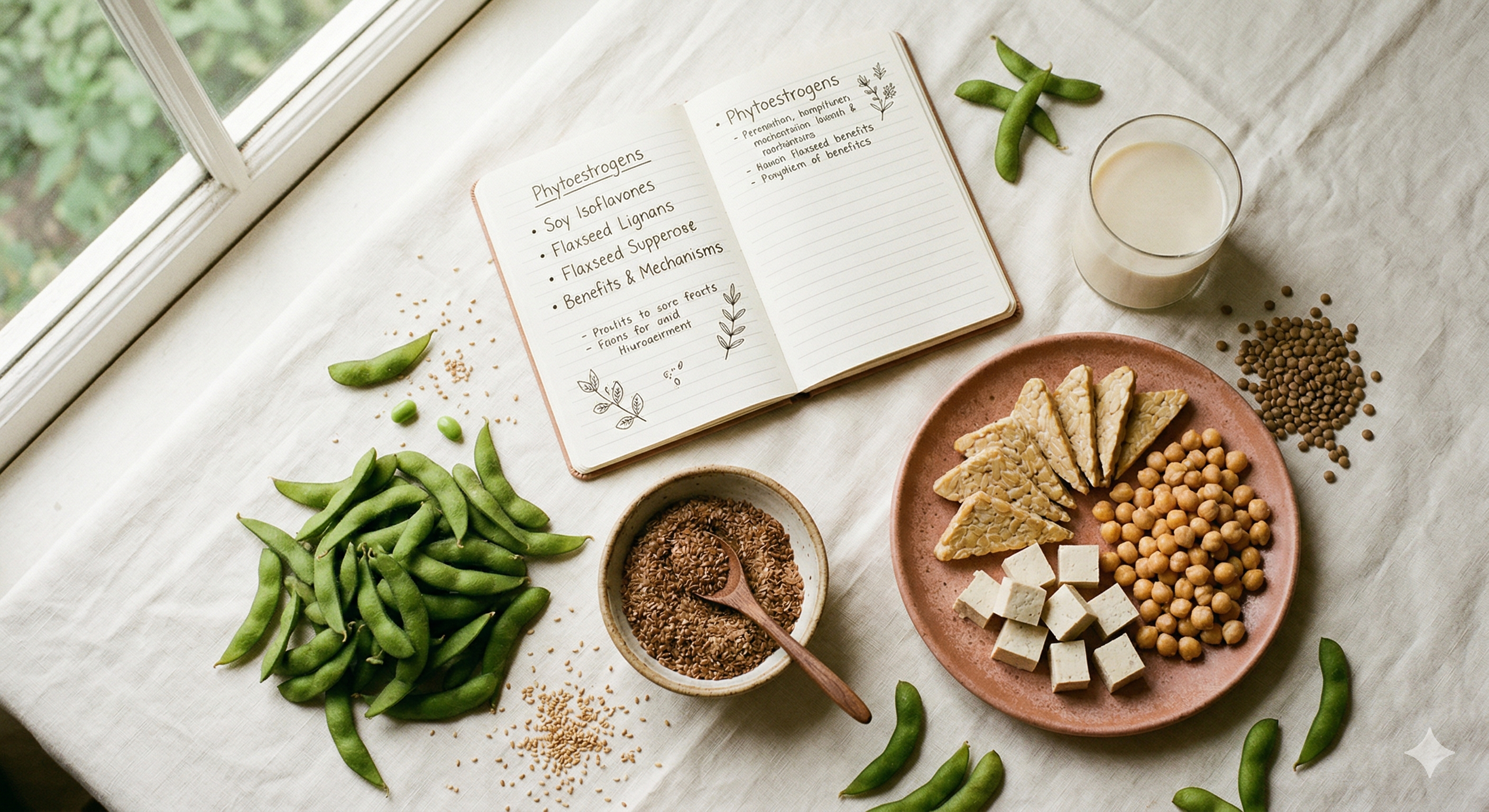
Phytoestrogen rich foods include soybeans, tofu, tempeh, lentils, flaxseeds, and soymilk.
If you've ever been told that eating tofu will mess with your hormones, or that flaxseeds will "raise your estrogen" - Welcome! You've landed exactly where you need to be.
Phytoestrogens are one of those nutrition topics that tend to travel in a thick cloud of fear, hype, and a surprising amount of fiction. So, let's cut through it together - not with hot takes, not with reassuring blanket statements, but with the actual science, nuanced, contextualized, and cited.
This post covers what phytoestrogens are, how the two major dietary classes (isoflavones and lignans) work in the body, what the research actually says about health effects, how food sources compare to supplements, safety considerations with real dosage context, and a full sample day of eating that provides meaningful amounts.
By the end, you'll be able to make informed choices - instead of just panicking about your edamame.
Phytoestrogens are not mini estrogen pills. They are plant compounds with complex, context-dependent interactions with human hormones - and the nuance matters enormously.
Section 1: What Are Phytoestrogens? (And No, They Are Not Actually Estrogen)
Let's start at the beginning. Phytoestrogens are naturally occurring plant compounds that are structurally similar to the human sex hormone estradiol (the body's main form of estrogen). Because of this structural resemblance, they can interact with the body's estrogen receptors, but that interaction is far more nuanced than simply "acting like estrogen."
📖 Jargon buster: "Estrogen receptor"
Think of estrogen receptors like locks, and estrogen as a key that fits them perfectly. When the key turns the lock, certain biological effects are switched on — like those involved in reproduction, bone strength, and heart health. Phytoestrogens are like a slightly different-shaped key: they can fit into the same locks, but they don't always turn them in the same direction, and the effects can vary depending on which lock and which body tissue they're in.
There are four main classes of dietary phytoestrogens: isoflavones, lignans, coumestans, and stilbenes (including resveratrol). For most people eating everyday foods, the two classes that matter most are isoflavones (primarily from soy and other legumes) and lignans (found across a wide range of plant foods, especially seeds and whole grains).
Phytoestrogens bind to estrogen receptors with different affinities than the body's own estrogen - and crucially, they can act as either estrogen agonists (mimicking estrogen) or antagonists (blocking estrogen's effects) depending on the tissue, the hormonal environment, and the specific compound (1, 2). This is not a semantic distinction, it is the entire reason why the fear-based narrative around phytoestrogens so frequently misses the mark.
📖 Jargon buster: "Estrogen agonist vs. antagonist"
An agonist switches something on; an antagonist switches it off — or at least blocks something else from switching it on. Phytoestrogens can do either, depending on the tissue. In breast tissue (where high estrogen activity is a concern for some cancers), phytoestrogens may actually act as blockers — occupying the receptor but not fully activating it, effectively keeping stronger estrogens out. In bone tissue, they may do the opposite and help maintain bone density. This "it depends" behavior is part of why the science is complicated.
The Receptor Story: Why Context Is Everything
Human cells have two main types of estrogen receptors: ERα (alpha) and ERβ (beta). The body's own estrogen binds to both with high affinity. Phytoestrogens, particularly isoflavones, show a preferential affinity for ERβ, which is distributed differently throughout the body than ERα.
📖 Jargon buster: "ERα vs. ERβ (estrogen receptor alpha vs. beta)"
These are simply two different versions of the estrogen "lock." ERα is found more in breast and uterine tissue. ERβ is more prevalent in bone, the cardiovascular system, the brain, and the immune system. Because phytoestrogens preferentially interact with ERβ, their effects in breast and uterine tissue may actually be weaker — or even blocking — compared to the body's own estrogen. This is one key reason why research on whole food phytoestrogen intake doesn't show the estrogen-stimulating effects on breast tissue that some people fear.
This receptor selectivity helps explain why the effects of phytoestrogens on different tissues can be quite different from one another - and why animal studies (which often use much higher doses and species with different receptor distributions) frequently don't translate cleanly to human health outcomes (3).
Section 2: Isoflavones - The Soy Squad (and Their Legume Friends)
Isoflavones are the most extensively studied phytoestrogens in the world, largely because of their high concentrations in soybeans and soy foods - and partly because of the so-called "Japanese Phenomenon": the observation that populations with lifelong high soy intake tend to have lower rates of certain chronic diseases than Western populations.
The Main Players
The three primary isoflavones in soybeans are genistein, daidzein, and glycitein. In unfermented soy foods like tofu and soy milk, they appear mostly in a 'locked' form attached to sugar molecules (called glucosides). In fermented foods like miso, tempeh, and natto, bacteria have already broken that lock, releasing the free, more bioavailable form (called aglycones). This is why fermented soy foods tend to deliver isoflavones more readily to the body.
📖 Jargon buster: "Glucoside vs. aglycone forms"
Think of the glucoside form like a vitamin capsule that still has its coating on — it needs to be broken down in the gut before your body can use it. The aglycone is the same thing with the coating already dissolved. Fermentation by bacteria (in miso, tempeh, natto) or your own gut bacteria does the dissolving. This is one reason fermented soy foods may deliver more active isoflavones than unfermented ones.
Daidzein is particularly interesting because a subset of people, around 25–50% of Western populations and 50–70% of Asian populations, can convert it via gut bacteria into a compound called equol, which has higher estrogenic activity and better bioavailability. Whether or not someone is an "equol producer" significantly affects how they respond to soy isoflavones, which helps explain why research results are often inconsistent. Different people, different gut bacteria, different outcomes (3).
📖 Jargon buster: "Equol"
Equol is a compound made by certain gut bacteria when they metabolize daidzein from soy. Not everyone has these bacteria, which is why the same amount of soy can have noticeably different effects in different people. Equol producers — people whose gut microbiome converts daidzein into equol — appear to get stronger benefits from soy consumption, particularly for menopausal symptoms.
📖 Jargon buster: "Bioavailability"
This simply means how much of a nutrient or compound actually makes it from your food into your bloodstream where it can do something useful. High bioavailability = more gets absorbed and used. Low bioavailability = most passes through without being absorbed. Processing, cooking method, gut microbiome health, and food matrix all influence bioavailability.
Isoflavone Content of Common Soy and Legume Foods
Soybeans and soy foods are by far the dominant dietary sources of isoflavones. Other legumes contribute smaller amounts. Values are from the USDA Isoflavone Database (Release 2.1) and peer-reviewed literature and should be understood as approximate - isoflavone content varies significantly by brand, growing conditions, and preparation method (19).
| Food | Serving Size | Approx. Total Isoflavones | Notes |
|---|---|---|---|
| Tempeh | 85g (3 oz) | ~53 mg | Fermented; higher free aglycone content |
| Edamame (cooked) | 155g (1 cup) | ~23 mg | Green soybeans; USDA confirmed |
| Firm Tofu | 126g (½ cup) | ~18–20 mg | Varies by brand and coagulant used |
| Dry Roasted Soy Nuts | 28g (1 oz) | ~17 mg | Concentrated source |
| Soy Milk (commercial) | 240ml (1 cup) | ~5–8 mg | Varies significantly by brand |
| Miso Paste | 17g (1 tbsp) | ~3–7 mg | Fermented; variable content |
| Chickpeas (cooked) | 164g (1 cup) | ~1–8 mg | Lower; mainly biochanin A + formononetin |
| Banza Chickpea Pasta (cooked) | ~85g (1 serving) | Modest; no product-specific data* | See note below table |
| Lentils (cooked) | 198g (1 cup) | ~0.4–1 mg | Trace amounts |
| * No peer-reviewed isoflavone data exists for Banza specifically. Values estimated from USDA chickpea flour data (USDA Isoflavone Database, Release 2.1, 2015). All values are approximate — isoflavone content varies by brand, growing conditions, and preparation method. Sources: USDA Isoflavone Database Release 2.1; Franke et al., J Agric Food Chem 1999; Linus Pauling Institute. | |||
*A note on Banza Chickpea Pasta specifically: Banza has not published independent isoflavone data, and no peer-reviewed analyses of this specific product exist in the scientific literature as of this writing. The USDA Isoflavone Database (Release 2.1) contains data for chickpea flour and whole chickpeas, but not for processed chickpea pasta products. Chickpeas primarily contain biochanin A and formononetin - two isoflavones that can be converted by gut bacteria and liver enzymes into the more active genistein and daidzein. Based on chickpea flour data in the USDA database (approximately 10 µg/g, or roughly 1 mg per 100g), a cooked serving of Banza (which also contains pea starch and tapioca, not pure chickpea) would deliver a modest isoflavone contribution - but precise figures should be treated with caution until product-specific analysis is available. For tracking purposes, whole chickpea or chickpea flour values are the best available proxy (15, 16).
Section 3: Lignans - The Quiet Achievers of the Phytoestrogen World
While isoflavones tend to steal the headlines, lignans are quietly the dominant phytoestrogen source in typical Western diets. If you eat seeds, whole grains, vegetables, or berries - you're already consuming lignans regularly, probably without realizing it.
How Lignans Work
Plant lignans are polyphenolic compounds found in the cell walls of plants. When consumed, they're metabolized by intestinal bacteria into compounds called enterolignans, specifically enterodiol and enterolactone. It's these metabolites, not the original plant lignans, that are primarily responsible for biological activity in the body (17).
📖 Jargon buster: "Enterolignans (enterodiol and enterolactone)"
When you eat flaxseed or sesame seeds, your gut bacteria get to work on the plant lignans and transform them into a different set of compounds — enterodiol and enterolactone. These are the forms that actually circulate in your blood and interact with estrogen receptors. Think of it like your gut microbiome doing the cooking — you provide the raw ingredient, they produce the active form.
Just like with isoflavones, gut microbiome composition significantly influences lignan conversion and bioavailability, another reminder that the same food can have meaningfully different effects in different people depending on their gut bacterial community (17).
Food Sources and Amounts
Flaxseed is the undisputed heavyweight champion of lignan content, containing 75–800 times more lignans than other plant foods. But don't underestimate the broader lineup. Values below are from Phenol-Explorer database data as reported in peer-reviewed literature (10, 11).
| Food | Serving | Approx. Lignan Content | Notes |
|---|---|---|---|
| Ground Flaxseed | 1 tbsp (10g) | ~85–100 mg SDG | Richest known source; ground absorbs better than whole |
| Whole Flaxseed | 1 tbsp (10g) | ~77–85 mg SDG | Less bioavailable when unground |
| Sesame Seeds | 1 tbsp (9g) | ~11–15 mg | Very high sesamin content; second to flax |
| Rye (whole grain) | 100g | ~1.4 mg | Best cereal grain source |
| Oats | 100g | ~0.6 mg | A good everyday contributor |
| Broccoli | 100g | ~0.1 mg | Small but consistent contributor |
| Berries (mixed) | 100g | ~0.1–0.5 mg | Strawberries and raspberries are higher |
| Tea (black/green) | 240ml (1 cup) | Trace–0.05 mg | Regular intake adds up over time |
| SDG = secoisolariciresinol diglucoside, the primary lignan precursor in flaxseed. Note: flaxseed oil does not contain significant lignans — you need ground or whole flaxseed. Sources: Milder et al., Molecules 2019 (PMC6429205); Adolphe et al., Br J Nutr 2010 (PMC4517353); Linus Pauling Institute. | |||
📖 Jargon buster: "SDG (secoisolariciresinol diglucoside)"
SDG is the main lignan precursor in flaxseed — the raw material your gut bacteria convert into the active enterolignans. When you see lignan content expressed as "mg SDG," it's reporting how much of this starting compound is present before gut conversion. The higher the SDG, the more raw material available for your microbiome to work with.
One important practical note: flaxseed oil does NOT provide significant lignans, because lignans are not in the oil fraction of the seed. You need whole or ground flaxseed to get the lignan benefit. Ground flaxseed is preferable to whole because it's easier for your body to access the contents (17).
Section 4: What Does the Research Say About Health Effects?
This is where it gets good, and where we have to be real about what we know, what we're still figuring out, and what the headlines have mangled.
Cardiovascular Health
A large prospective cohort study - meaning it followed real people over many years and tracked what they ate and what happened to them - tracked nearly 120,000 US adults across the Nurses' Health Study and the Health Professionals Follow-up Study. Researchers found that higher total phytoestrogen intake, including both isoflavones and lignans, was significantly associated with lower risk of death overall and lower risk of death from cardiovascular disease (4).
📖 Jargon buster: "Prospective cohort study"
This is one of the strongest types of observational research in nutrition. Researchers recruit a large group of people (the "cohort"), collect detailed information about their diet and lifestyle, and then follow them for years or decades to see who develops which diseases or health outcomes. Because the diet data is collected before the outcomes, these studies are much better at identifying real associations than studies that ask people to recall their past diet after they've gotten sick.
📖 Jargon buster: "Hazard ratio (HR)"
A hazard ratio is a way of expressing relative risk over time. An HR of 0.90 for isoflavones means that people in the highest intake group had about a 10% lower risk of the outcome (in this case, death) compared to people in the lowest intake group. An HR below 1.0 signals a protective association; above 1.0 signals increased risk. The closer to 1.0, the smaller the effect.
Specifically, when comparing the people who ate the most isoflavones to those who ate the least, the risk of dying during the follow-up period was 10% lower (hazard ratio: 0.90). For lignans, that figure was 7% lower (HR: 0.93). Separately, meta-analyses (pooled analyses of multiple studies) have found that soy isoflavones can modestly lower LDL cholesterol, and flaxseed lignans can reduce both LDL and total cholesterol in people with elevated lipid levels (4).
📖 Jargon buster: "Meta-analysis"
A meta-analysis is a study of studies. Researchers collect all the well-designed individual trials on a given topic, pool the data, and run a new statistical analysis on the combined results. This gives more statistical power than any single study and helps identify whether an effect is real and consistent across different populations and settings.
Menopausal Symptoms
One of the most researched applications. A 2024–2025 systematic review and meta-analysis (which screened over 2,000 articles and identified 12 eligible trials with 533 participants) found that soy isoflavones were statistically effective for reducing menopausal symptoms compared to placebo, though the effect size was modest. A combined trial of soy isoflavones with SDG lignans from flaxseed also showed favorable outcomes (5, 6).
📖 Jargon buster: "Systematic review"
A systematic review is a rigorous, pre-specified search of all available research on a question. Unlike a regular literature review where authors pick their favorite studies, a systematic review follows strict rules about which studies to include, minimizing cherry-picking. It's the gold standard for summarizing a body of evidence.
📖 Jargon buster: "Placebo-controlled trial"
Participants in these studies are randomly assigned to either the treatment being studied (e.g., soy isoflavones) or an identical-looking but inactive placebo. Neither the participants nor the researchers know who got what until the study ends — this is called "double-blind." This design controls for the powerful placebo effect and is the gold standard for testing whether something actually works.
📖 Jargon buster: "Effect size (Hedges' g)"
This is a standardized measure of how big the difference was between the treatment and control groups. A Hedges' g of −0.25 (as found in the 2025 meta-analysis on soy isoflavones and menopausal symptoms) is considered a small but statistically real effect. In practical terms: not dramatic, but meaningful — especially for women seeking non-hormonal options.
This doesn't mean soy is a direct hormone replacement therapy (HRT) substitute, but for women who cannot or prefer not to use HRT, the evidence for isoflavones providing meaningful symptom relief is real, not just wellness wishful thinking.
Bone Health
The evidence on phytoestrogens and bone mineral density is promising but still developing. The European Food Safety Authority (EFSA) - the EU's equivalent of the FDA for food safety science - has found evidence that soy isoflavones may slow the loss of bone mineral density at the lumbar spine (lower back) in postmenopausal women when consumed consistently over 6–9 months. However, EFSA concluded the evidence wasn't yet strong enough to officially establish a cause-and-effect relationship (9).
📖 Jargon buster: "Bone mineral density"
A measure of how dense and strong your bones are, typically assessed by a DEXA scan. As estrogen levels decline during menopause, bone loss accelerates. Maintaining bone mineral density reduces the risk of osteoporosis and fractures later in life. Researchers look specifically at the lumbar spine (lower back) and hip — areas most vulnerable to osteoporotic fractures.
Cancer - The Most Nuanced Part
This is the area that gets the most fear-based coverage. Let's look at what the evidence actually says, carefully.
Breast cancer: In Asian populations with lifelong soy consumption starting in childhood, higher isoflavone intake is associated with modestly lower breast cancer risk. In Western populations (where soy is often introduced later in life), the data is less consistent. Crucially, a pooled analysis of three large prospective cohort studies found that soy isoflavone intake of 10 mg or more per day was associated with a 25% reduced risk of breast cancer tumor recurrence in survivors. Current evidence does not support the idea that soy foods raise breast cancer risk in humans (21).
📖 Jargon buster: "Tumor recurrence"
In cancer survivors, recurrence means the cancer coming back after treatment. Studies tracking breast cancer survivors who ate more soy found they were less likely to have their cancer return — a key clinical concern for this population, and one reason the earlier advice to "avoid soy if you've had breast cancer" has largely been reversed by major dietetic and oncology organizations.
The fears about soy "fueling" breast cancer are largely driven by animal studies in rodents, which metabolize isoflavones very differently from humans - and at doses that would be impossible to achieve through normal food intake (7).
Prostate cancer: Meta-analyses suggest soy food consumption is associated with reduced prostate cancer risk.
Endometrial cancer: A meta-analysis found higher isoflavone intake associated with a 19% lower risk of endometrial cancer (21). This is consistent with the ERβ-preferring behavior of isoflavones, which may have a blocking rather than stimulating effect on uterine tissue.
Section 5: Food Sources vs. Supplements - A Very Important Distinction
Here's where I put on my dietitian hat and make a point I feel strongly about: the evidence for phytoestrogens is primarily built on food-based intake, not supplements. And the distinction matters more than many wellness bloggers would have you believe.
Why Whole Foods Win
When you eat edamame, tempeh, or ground flaxseed, you're getting phytoestrogens embedded in a matrix of fiber, protein, healthy fats, vitamins, and minerals. The food matrix affects how these compounds are absorbed and metabolized. It also comes with natural dose limitations - you can only eat so much tofu before you've simply had dinner.
Supplements are a different story. They're typically standardized extracts delivering concentrated, isolated isoflavones - often 50–150 mg per dose - bypassing the natural context in which these compounds evolved to be consumed. The long-term safety data on high-dose, isolated isoflavone supplements is simply not as robust as the data on whole food consumption.
What Supplements Offer - and What They Don't
Isoflavone supplements are not inherently dangerous for most healthy adults, and they can be effective for menopausal symptom management in women without contraindications. But they're a targeted therapeutic tool, ideally used under guidance, rather than a general wellness habit (9, 18).
The Linus Pauling Institute at Oregon State University notes that one study found 100 mg/day of soy isoflavones for six months was well tolerated in older adults. The European Food Safety Authority (EFSA) reviewed evidence up to 150 mg/day of supplemental isoflavones and found no significant effects on endometrial (uterine lining) thickness, thyroid hormones, or breast cancer risk markers for up to 30 months. Beyond 60 months at high doses, some non-cancerous changes in uterine tissue were reported, which warrants ongoing caution at very high supplemental doses long-term (9, 18).
The research on phytoestrogens is built primarily on food intake data, not supplements. When in doubt, eat the edamame.
Section 6: What About Toxicity and Safety? (The Nuanced Answer)
Let's talk about the part of this conversation that tends to go sideways fast.
The Animal Study Problem
A significant portion of the concern about phytoestrogen toxicity comes from animal studies - particularly rodent studies - that use doses of isoflavones that are completely unrealistic relative to normal human dietary intake. Rodents also metabolize isoflavones very differently from humans; they have less efficient detoxification pathways, which means isoflavones accumulate in rodent blood at concentrations that simply don't occur in humans eating reasonable quantities of soy food. When human data from large, long-term studies is examined, the picture is consistently more reassuring (7).
📖 Jargon buster: "Glucuronidation (phase II metabolism)"
This is one of the body's main detoxification processes, where the liver attaches a molecule to a compound to make it more water-soluble — essentially gift-wrapping it so the kidneys can flush it out. Humans are better at glucuronidating isoflavones than rodents, so the same dose that builds up to high levels in a rat's bloodstream is processed and cleared much more efficiently in a human. This is a key reason rodent study findings often overestimate risk for humans.
The French Agency for Food, Environmental and Occupational Health & Safety (ANSES) has set toxicological reference values (TRVs) for daily isoflavone intake: 0.02 mg per kilogram of body weight per day for the general population. For a 70 kg (154 lb) adult, this works out to about 1.4 mg/day, well below the intake typical in traditional Asian diets (15–50 mg/day) or clinical trial doses (7).
📖 Jargon buster: "Toxicological Reference Value (TRV)"
A TRV is a conservative safety threshold set by a regulatory agency — the daily intake amount that, based on available evidence, should not cause harm. These values are typically set with large safety margins built in, especially for vulnerable populations. A TRV is not a "safe vs. dangerous" cliff — it's more like a speed limit with a generous buffer. Exceeding it slightly doesn't automatically mean harm; it means the regulatory body wants more caution.
It's important to note that the ANSES review assessed risks only, it did not incorporate the body of evidence on health benefits of soy consumption. This is a critical context point when these numbers circulate in media coverage. By contrast, the intake levels studied in clinical trials for menopausal symptom management (50–100 mg/day) are dramatically higher than these conservative TRVs, and those trials have not shown clinically significant harm in healthy adult women without specific contraindications (3, 7).
Who Should Exercise Extra Caution?
The following groups should discuss phytoestrogen intake, particularly supplements, with their healthcare provider:
• Individuals with a personal history of estrogen-receptor-positive breast cancer, breast hyperplasia, or uterine cancer
• Pregnant and breastfeeding women (insufficient safety data for supplements specifically)
• Infants - though long-term human studies on soy formula do not show adverse hormonal effects
• Anyone taking thyroid medication (isoflavones may affect absorption - take medications and soy supplements at different times)
• Anyone on tamoxifen or other hormonal therapies, discuss with your oncologist
What About Lignans?
Lignan precursors from foods are not associated with serious adverse effects in the research literature. Very high doses of flaxseed (45–50g/day, which is several tablespoons) may cause increased stool frequency. Sesame lignan supplements (50 mg/day) have been tolerated in small studies with minor gastrointestinal side effects. The safety of lignan supplements during pregnancy has not been established, so whole food sources are preferred during that time (22).
Section 7: How Much Do You Actually Need?
Isoflavones
The average daily isoflavone intake in the US is estimated at less than 1 mg/day. In traditional Asian diets, it's been estimated at 15–50 mg/day, a range strongly associated in epidemiological studies with favorable health outcomes. For the research on menopausal symptom management, clinical trials generally use 50–100 mg/day of isoflavones, often in twice-daily doses. For general dietary health benefits, consistent daily intake in the 25–50 mg range from whole food sources appears meaningful based on prospective cohort data (3, 5).
📖 Jargon buster: "Epidemiological studies"
Epidemiology is the study of how health and disease are distributed across populations — essentially, who gets sick and why, and what dietary or lifestyle patterns are associated with better or worse outcomes. Epidemiological studies don't prove that one thing causes another, but they identify associations that can then be tested in controlled trials.
Lignans
There is no established Dietary Reference Intake (DRI) for lignans, no official daily recommended amount has been set, because the research isn't yet at that stage. That said, consistent daily intake of lignan-rich foods is associated with favorable health outcomes in prospective research. Adding 1 tablespoon of ground flaxseed daily provides approximately 85–100 mg of SDG, making it arguably the single highest-yield dietary action for lignan intake.
Frequency of Consumption
The research on phytoestrogens is most consistent for regular, daily intake rather than occasional large doses. This makes biological sense: phytoestrogens aren't stored in significant quantities, and consistent exposure appears to support their gut microbiome-dependent conversion into active forms. A moderate amount of soy or flaxseed daily is likely more effective than a large serving once a week.
Section 8: A Sample Day of Eating for Meaningful Phytoestrogen Intake
Ready to see what this actually looks like on a plate? Below is a realistic, enjoyable day of eating that provides meaningful amounts of both isoflavones and lignans, without force-feeding yourself tofu at every meal. (Unless you want to. Tofu can be delightful.)
Target range for this sample day: ~25–45 mg isoflavones from most meals; the dinner with tempeh pushes it higher. Substantial lignan contribution anchored by ground flaxseed.
Breakfast: Flaxseed Berry Smoothie Bowl
1 cup plain soy milk (~6 mg isoflavones)
1 tablespoon ground flaxseed (~90 mg SDG lignans)
½ cup mixed berries (small lignan contributor; antioxidant bonus)
1 tbsp tahini drizzle (sesame lignans)
½ cup rolled oats (lignan contributor, fiber)
Estimated isoflavones: ~5–7 mg | Lignans: substantial (flaxseed dominant)
Pro tip: Ground flaxseed blends invisibly into smoothie bowls. Your breakfast will have no idea it's doing something impressive.
Mid-Morning Snack: Dry Roasted Edamame
¼ cup dry roasted edamame (~17–20 mg isoflavones per serving)
Optional: handful of walnuts (trace lignans + omega-3)
Estimated isoflavones: ~17–20 mg | Lignans: trace
This is an isoflavone power punch in a snack-sized package. Dry roasted edamame is shelf-stable, portable, and frankly underrated as a snack.
Lunch: Sesame Ginger Tofu Bowl
85g (3 oz) firm tofu, baked (~15 mg isoflavones)
½ cup chickpeas (cooked) (~2–4 mg isoflavones, mainly biochanin A and formononetin)
Lots of vegetables: broccoli, bok choy, shredded carrots (lignan contributors)
Brown rice or other whole grain base (lignan contributor)
Sesame dressing with 1 tsp sesame seeds (sesamin lignans)
Estimated isoflavones: ~17–19 mg | Lignans: moderate from sesame + whole grains + vegetables
Afternoon Snack: Whole Grain Rye Crispbread
2 rye crispbreads (best cereal grain source of lignans)
2 tablespoons almond butter (trace lignans)
Sliced strawberries (lignan contributor)
Estimated isoflavones: minimal | Lignans: moderate from rye + berries
Dinner: Banza Chickpea Pasta with Tempeh Bolognese
2 oz dry Banza Chickpea Pasta, cooked - modest isoflavone contribution from the chickpea base (exact figures unavailable; see note in Section 2)
85g (3 oz) tempeh, crumbled as a meat substitute (~53 mg isoflavones - this is the isoflavone star of the meal)
Tomato sauce with garlic and herbs
Side salad with a sprinkle of ground flaxseed
Estimated isoflavones: ~53–55 mg from tempeh | Lignans: moderate from added flax
Note: This dinner alone pushes your daily isoflavone intake quite high. That's fine for most healthy adults eating a mixed diet, this is a delicious, evidence-informed dinner, not a therapeutic dose protocol.
Evening: Green Tea (decaf, of course)
1–2 cups green tea (trace isoflavones and lignans; catechins as a bonus)
| Meal | Est. Isoflavones | Lignan Contribution |
|---|---|---|
| Breakfast — Flaxseed Berry Smoothie Bowl | ~5–7 mg (soy milk) | HIGH (ground flaxseed + sesame) |
| Morning Snack — Dry Roasted Edamame | ~17–20 mg | Low |
| Lunch — Sesame Ginger Tofu Bowl | ~17–19 mg | Moderate (sesame + whole grains + veg) |
| Afternoon Snack — Rye Crispbread + Almond Butter | Minimal | Moderate (rye + berries) |
| Dinner — Tempeh Bolognese with Chickpea Pasta | ~53–55 mg | Moderate (added flaxseed) |
| Evening — Green Tea | Trace | Trace |
| Daily Total | ~92–101 mg* | High (flaxseed dominant) |
| * This is an intentionally phytoestrogen-rich day. A typical day without tempeh but with tofu, edamame, and soy milk would deliver ~25–50 mg of isoflavones — still within the range associated with health benefits in prospective research. All values are approximate and vary by brand and preparation. | ||
Section 9: The Bottom Line (Because You Deserve One)
Phytoestrogens are not the hormonal wrecking balls they've been made out to be in certain corners of the internet. They're also not magic supplements that will solve everything overnight. They're bioactive food compounds with real, context-dependent effects - and the evidence, read carefully and in full, is largely reassuring and in many cases quite positive.
Here's the summary:
Isoflavones (primarily from soy) and lignans (primarily from flaxseed, sesame, and whole grains) are the two major dietary classes of phytoestrogens.
They interact with estrogen receptors in a tissue-selective, context-dependent way - not like adding exogenous estrogen to your system.
The research supports potential benefits for cardiovascular health, menopausal symptom management, bone health, and possibly certain cancer risks - with the strongest evidence in populations with consistent, lifelong exposure.
Food sources are the gold standard. Supplements can have a role for specific therapeutic purposes but aren't a required or universally recommended part of everyone's health strategy.
Concerns about toxicity are largely based on animal studies at unrealistic doses. The human evidence - including millions of person-years of follow-up - does not support significant harm from typical dietary intake.
Special populations (estrogen-sensitive cancer history, pregnancy, pre-pubescent children) should discuss phytoestrogen intake, especially supplements, with their healthcare provider.
Consistency matters more than occasional high doses. Regular daily intake from varied food sources is the approach best supported by research.
Ground flaxseed (1 tablespoon/day) is probably the single highest-impact dietary addition for lignan intake. Add it to everything.
Eat your edamame. Add flaxseed to your smoothie. Enjoy your tofu stir-fry. Science has your back, with nuance.
Peer-Reviewed & Scientific Sources
1. Patra S, Gorai S, Pal S, et al.. A review on phytoestrogens: current status and future direction.. Phytotherapy Research. 2023;37:3097–3120.. 2023. DOI: 10.1002/ptr.7821. https://pubmed.ncbi.nlm.nih.gov/37246823/
2. Domínguez-López I, Yago-Aragón M, Salas-Huetos A, et al.. Effects of dietary phytoestrogens on hormones throughout a human lifespan: a review.. Nutrients. 2020;12(8):2456.. 2020. DOI: 10.3390/nu12082456. https://www.mdpi.com/2072-6643/12/8/2456
3. Rietjens IMCM, Louisse J, Beekmann K.. The potential health effects of dietary phytoestrogens.. British Journal of Pharmacology. 2017;174(11):1263–1280.. 2017. DOI: 10.1111/bph.13622. https://pmc.ncbi.nlm.nih.gov/articles/PMC5429336/
4. Chen Z, et al.. Dietary phytoestrogens and total and cause-specific mortality: results from 2 prospective cohort studies.. American Journal of Clinical Nutrition. 2023;117(3):528–540.. 2023. DOI: 10.1016/j.ajcnut.2022.10.019. https://pmc.ncbi.nlm.nih.gov/articles/PMC10196593/
5. Luan, et al.. Effects of soy isoflavones on menopausal symptoms in perimenopausal women: a systematic review and meta-analysis.. Peer J. 2025.. 2025. https://pmc.ncbi.nlm.nih.gov/articles/PMC12296567/
6. Pokushalov E, et al. Assessing the combined effects of Black Cohosh, Soy Isoflavones, and SDG Lignans on menopausal symptoms: a randomized, double-blind, placebo-controlled clinical trial. European Journal of Nutrition. 2025;64:138.. 2025. DOI: 10.1007/s00394-025-03588-y. https://pubmed.ncbi.nlm.nih.gov/40131516/
7. López-Moreno M, López-Gil JF.. Debunking the myth: are soy isoflavones truly a public health concern?. Frontiers in Nutrition. 2025.. 2025. https://pmc.ncbi.nlm.nih.gov/articles/PMC12303811/
8. Li Y, et al. Exploring the anti-aging potential of phytoestrogens: focus on molecular mechanisms and menopausal symptom modulation. Frontiers in Nutrition. 2025 Sep 25;12:1651367. https://pmc.ncbi.nlm.nih.gov/articles/PMC12507604/
9. EFSA Panel on Food Additives and Nutrient Sources Added to Food (ANS).. Risk assessment for peri- and post-menopausal women taking food supplements containing isolated isoflavones.. EFSA Journal. 2015;13(10):4246.. 2015. DOI: 10.2903/j.efsa.2015.4246. https://www.efsa.europa.eu/en/efsajournal/pub/4246
10. Rodgriguez-Garcia C, et al. Naturally lignan-rich foods: a dietary tool for health promotion? Molecules. 2019;24(5):917. 2019. DOI: 10.3390/molecules24050917. https://pmc.ncbi.nlm.nih.gov/articles/PMC6429205/
11. Imran M, et al. Potential protective properties of flax lignan secoisolariciresinol diglucoside.. Nutr J. 2015; 14:71. doi: 10.1186/s12937-015-0059-3https://pmc.ncbi.nlm.nih.gov/articles/PMC4517353/
12. Berenshtein L, et al. Stability and bioaccessibility of lignans in food products. ACS Food Science & Technology. 2024; 9(2): 2022-2031. doi: 10.1021/acsomega.3c07636https://pmc.ncbi.nlm.nih.gov/articles/PMC10795133/
13. Lampe JW. Isoflavonoid and lignan phytoestrogens as dietary biomarkers. Journal of Nutrition. 2003;133(3):956S–964S. 2003. DOI: 10.1093/jn/133.3.956S. https://pubmed.ncbi.nlm.nih.gov/12612182/
14. Murphy P, et al. Isoflavones in retail and institutional soy foods. Journal of Agricultural and Food Chemistry. 1999;47(7):2697–2704. 1999. DOI: 10.1021/jf981144o. https://pubs.acs.org/doi/10.1021/jf981144o
15. Megias C, et al. Isoflavones in chickpea (Cicer arietinum) protein concentrates. Journal of Functional Foods. 2016;18:584–592. https://doi.org/10.1016/j.jff.2015.12.012. https://www.sciencedirect.com/science/article/abs/pii/S1756464615006167
16. Dulce-Maria DA, et al. Isoflavones from black chickpea (Cicer arietinum L) sprouts with antioxidant and antiproliferative activity. Saudi J Biol Sci. 2020; 28(1): 1141-1146. doi: 10.1016/j.sjbs.2020.11.048https://pmc.ncbi.nlm.nih.gov/articles/PMC7783802/
Databases & Regulatory Sources
17. Linus Pauling Institute, Oregon State University. Lignans. Micronutrient Information Center.. Updated 2024.. . https://lpi.oregonstate.edu/mic/dietary-factors/phytochemicals/lignans
18. Linus Pauling Institute, Oregon State University. Soy Isoflavones. Micronutrient Information Center.. Updated 2024.. . https://lpi.oregonstate.edu/mic/dietary-factors/phytochemicals/soy-isoflavones
19. U.S. Department of Agriculture, Agricultural Research Service.. USDA Database for the Isoflavone Content of Selected Foods, Release 2.1. Nutrient Data Laboratory. 2015.https://www.ars.usda.gov/ARSUserFiles/80400525/Data/isoflav/Isoflav_R2-1.pdf
20. Haytowitz DB, Bhagwat S.. Assessment of Sources and Dietary Intake of Isoflavones in the U.S. Diet. USDA/ARS.. 2009.. . https://www.ars.usda.gov/ARSUserFiles/80400525/Articles/EB09_Isoflavone.pdf
21. Linus Pauling Institute, Oregon State University.. Soy Isoflavones - Cancer section. Micronutrient Information Center.. Updated 2024.. . https://lpi.oregonstate.edu/mic/dietary-factors/phytochemicals/soy-isoflavones#cancer
22. Linus Pauling Institute, Oregon State University.. Lignans - Safety section. Micronutrient Information Center.. Updated 2024.. . https://lpi.oregonstate.edu/mic/dietary-factors/phytochemicals/lignans#safety