Nightshade Vegetables: Should You Actually Avoid Them?
(Spoiler: Probably Not, but Let’s Talk About It)
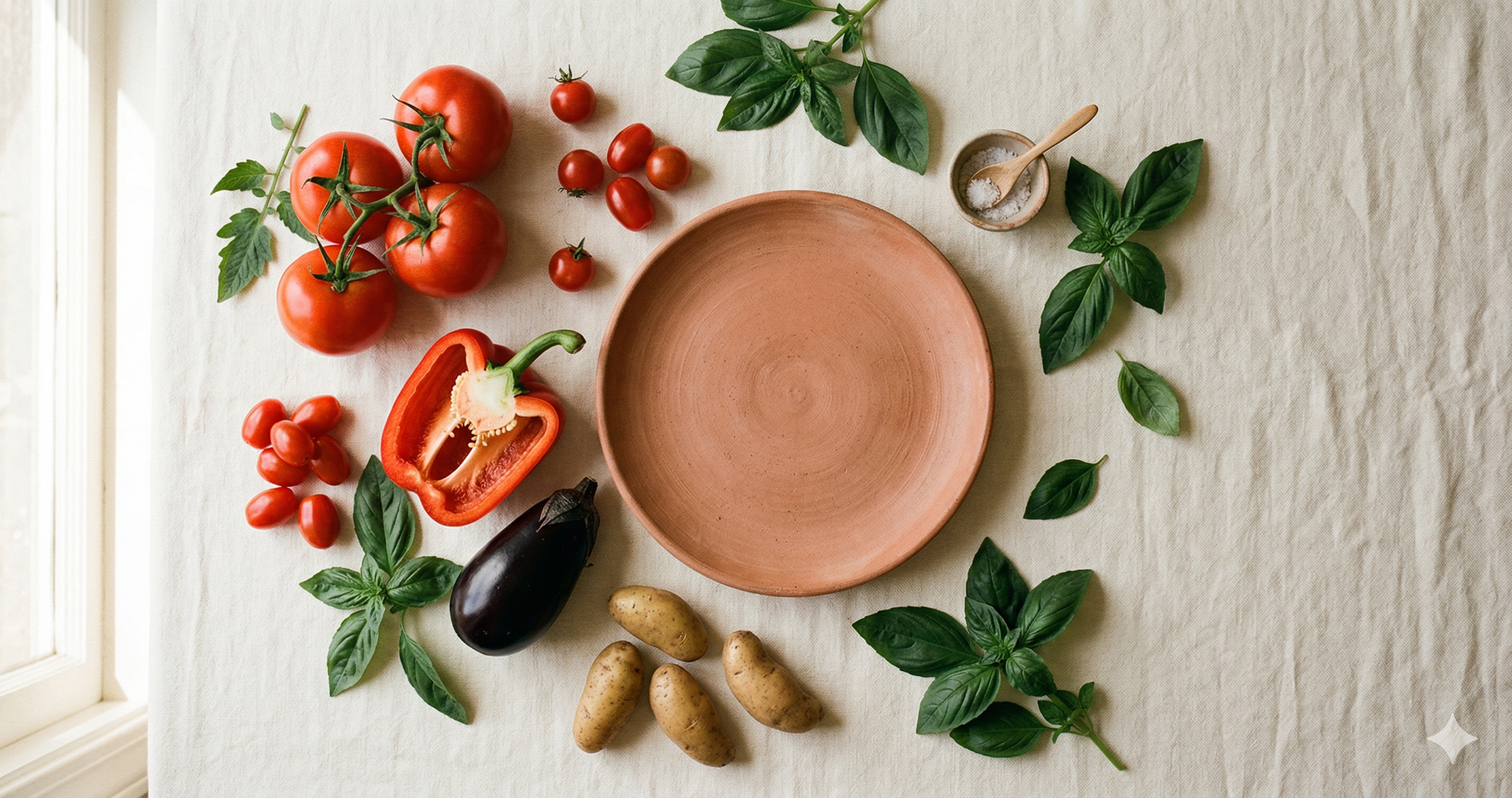
Nightshade vegetables include potatoes, eggplant, tomatoes, basil, bell peppers, and much much more.
If you have spent more than fifteen minutes on the wellness side of the internet, you have probably stumbled across a post warning you that nightshade vegetables are out to get you. Tomatoes? Inflammatory. Potatoes? Gut destroyers. Bell peppers? Basically tiny grenades. Eggplant? Don’t even think about it.
And honestly, I understand the appeal of that narrative. It’s tidy. It’s dramatic. It gives you a villain. But here’s the thing about nutrition: the minute someone hands you a simple answer, you should probably start asking better questions.
So, let’s do exactly that. Let’s dig into the actual science behind nightshade avoidance, look at who might genuinely benefit from limiting them, and figure out whether your beloved marinara sauce deserves the side-eye it’s been getting.
First Things First: What Even Are Nightshades?
Nightshades belong to the plant family Solanaceae, a sprawling botanical clan of over 2,000 species. The edible members you are most likely to find in your kitchen include tomatoes, white potatoes, bell peppers, chili peppers, eggplant, tomatillos, and goji berries (Kuang et al., 2023, Digestive Diseases and Sciences). Tobacco also belongs to this family, which, let’s be honest, has not done great things for the group’s PR.
All nightshades produce natural chemical compounds called glycoalkaloids. These serve as the plant’s built-in pest control system, protecting against insects and disease. The most talked-about glycoalkaloids in the nutrition world are solanine (found mainly in potatoes), tomatine (in tomatoes), and capsaicin (in chili peppers) (Milner et al., 2011, Journal of Agricultural and Food Chemistry). Think of them as the plant’s tiny bodyguards. The question is whether those bodyguards are also picking fights with your digestive system.
Why People Recommend Avoiding Them
The case against nightshades generally rests on a few pillars. Let’s walk through them honestly, because some of these concerns are not entirely made up (even if the internet has, shall we say, embellished them).
The Glycoalkaloid Concern
Glycoalkaloids can, at high enough concentrations, disrupt cell membranes. That is not disputed. A 2002 study by Patel and colleagues demonstrated that potato glycoalkaloids, specifically alpha-solanine and alpha-chaconine, could increase intestinal permeability and worsen colonic injury in mice that were genetically predisposed to inflammatory bowel disease (Patel et al., 2002, Inflammatory Bowel Diseases). A follow-up study by Iablokov et al. (2010) confirmed that fried potato skins with medium-to-high glycoalkaloid content elevated pro-inflammatory cytokines (IFN-γ, TNF-α, and IL-17) and enhanced intestinal permeability in two different mouse models of IBD (Iablokov et al., 2010, Digestive Diseases and Sciences).
These are real findings from legitimate labs. But (and this is a big “but”) there are a few important caveats. First, these were mouse studies using isolated glycoalkaloids or deep-fried potato skins, not humans eating a normal serving of roasted potatoes with dinner. Second, the inflammatory effects were observed in animals already predisposed to IBD, not in healthy animals. The control mice? They were fine.
Mouse studies with isolated compounds do not automatically translate to your Tuesday night stir-fry.
The Inflammation and Arthritis Theory
This one has been circulating for decades. The idea is that nightshade alkaloids promote systemic inflammation and worsen symptoms in people with autoimmune conditions like rheumatoid arthritis (RA) or psoriatic arthritis. It sounds plausible, and plenty of patients report feeling better when they cut nightshades out.
But here is what the evidence actually says: according to the Arthritis Foundation, the belief that nightshades worsen arthritis is not supported by robust scientific evidence (Arthritis Foundation, 2025). A 2020 study published in Nutrients noted that peer-reviewed literature has never directly addressed the role of nightshade vegetables in rheumatoid arthritis disease activity (Edefonti et al., 2020, Nutrients). And a 2024 study protocol for a randomized controlled trial from Iran acknowledged that theirs would be the first RCT ever to evaluate a nightshade elimination diet in RA patients, underscoring just how little controlled human data we actually have (Golmohammadi et al., 2024, Trials).
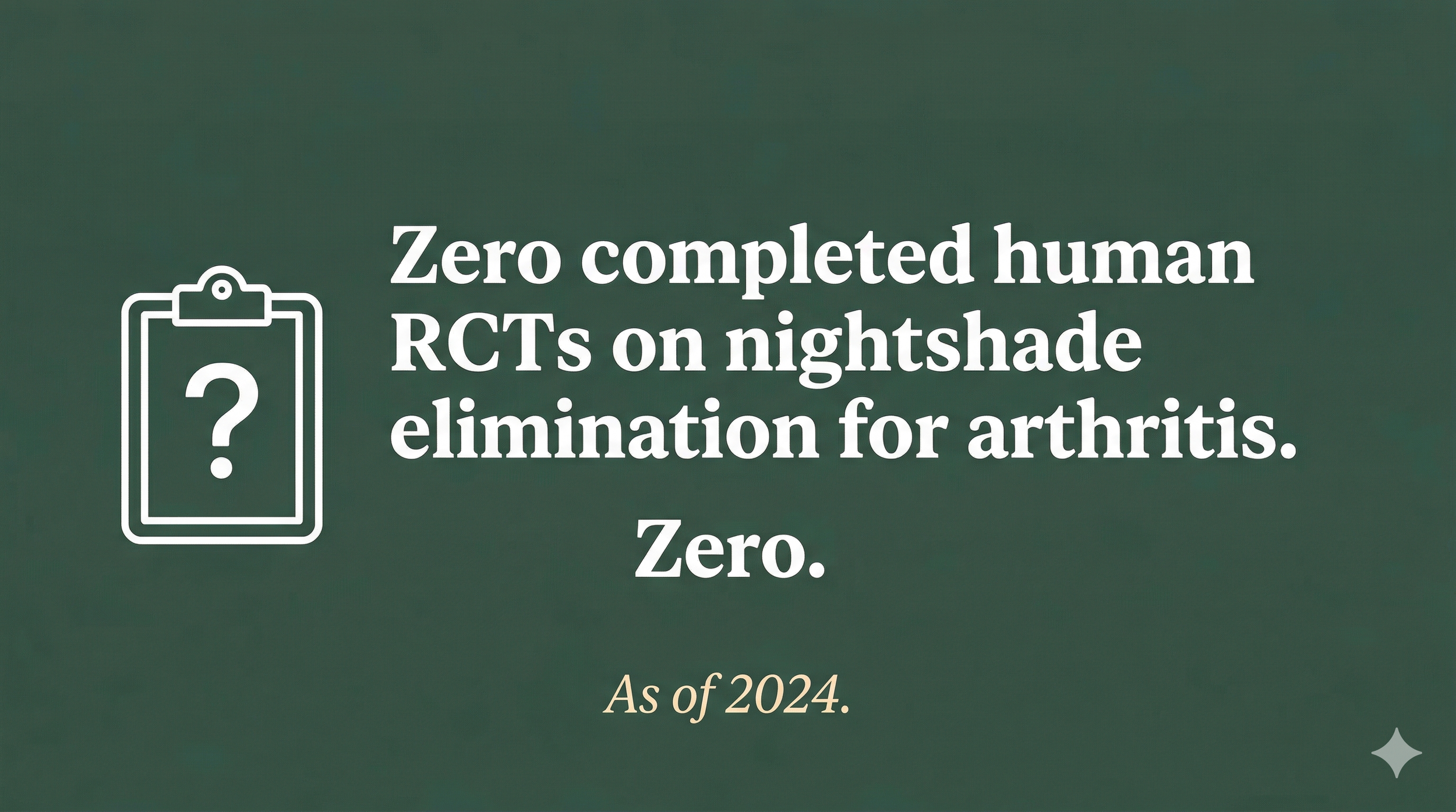
Let me say that again for the people in the back: as of 2024, we do not have a single completed randomized controlled trial in humans examining whether removing nightshades improves arthritis outcomes. The anecdotal reports are plentiful. The peer-reviewed clinical data? Almost nonexistent.
The “Leaky Gut” Connection
ome wellness circles claim that nightshade lectins and saponins damage the intestinal lining, contributing to increased intestinal permeability (commonly called “leaky gut”). While dietary lectins and saponins have been shown to increase intestinal permeability in some laboratory settings, these studies did not specifically examine the lectins found in nightshades (Bischoff et al., 2014, BMC Gastroenterology). The leap from “lectins in general can affect gut permeability in a petri dish” to “your spaghetti sauce is destroying your intestinal lining” is, to put it diplomatically, a rather large one.
The Mast Cell Hypothesis (Newer Research)
A 2023 narrative review by Kuang and colleagues at the University of Pittsburgh is one of the more thoughtful recent publications on this topic. The authors noted that nightshade-derived glycoalkaloids have the potential to activate mast cells in the gut mucosa, which could theoretically contribute to symptoms in both IBS and IBD (Kuang et al., 2023, Digestive Diseases and Sciences). This is a genuinely interesting line of inquiry. However, the authors themselves described the existing literature as “limited” and emphasized that much of the evidence comes from animal models and in vitro studies. Translation: this is a hypothesis worth investigating further, not a reason to swear off salsa.
Now for the Plot Twist: Nightshades Are Actually Pretty Great for You
Here is where things get fun, because the same family of vegetables being demonized on TikTok also happens to be packed with beneficial compounds. Let’s give credit where it is due.
Tomatoes are one of the richest dietary sources of lycopene, a carotenoid antioxidant associated with reduced cardiovascular disease risk. They are also excellent sources of vitamins A and C (Przybylska & Tokarczyk, 2022, International Journal of Molecular Sciences).
Bell peppers contain outstanding amounts of vitamin C (more per serving than oranges, actually) along with potassium and folate.
Chili peppers contain capsaicin, which has been studied for its potential to support weight management, reduce pain signaling, and even improve cardiovascular markers (Whiting et al., 2014, Appetite). Capsaicin is literally used in prescription pain-relief creams. Ironic for a compound some people claim causes inflammation, right?
Purple and pigmented potatoes are rich in anthocyanins. A 2011 study published in The Journal of Nutrition compared three varieties of the same nightshade (white-, yellow-, and purple-fleshed potatoes, all Solanum tuberosum) and found that men who consumed 150 grams of the purple variety daily for six weeks had significantly lower C-reactive protein and lower IL-6 levels than those eating the white variety (Kaspar et al., 2011, The Journal of Nutrition). In other words, even within the nightshade family, specific varieties can be actively anti-inflammatory.
Eggplant is rich in anthocyanins and fiber, and some research suggests that solanine itself may have anti-inflammatory properties at low doses (Kenny et al., 2013, Life Sciences). The very compound used to vilify nightshades might actually help tame inflammation. You cannot make this stuff up.
The same glycoalkaloids people fear may actually have anti-inflammatory, anti-cancer, and antioxidant properties at the doses found in food…Context is everything.
So Who Might Actually Benefit from Avoiding Nightshades?
I am not here to tell you that nightshade concerns are entirely fabricated. For a small subset of people, limiting or temporarily removing nightshades from the diet may be worth exploring. Specifically:
People with a diagnosed IgE-mediated nightshade allergy. True allergies to nightshade proteins (particularly to tomato or eggplant) do exist, though they are considered rare. The immune mechanism involves IgE antibodies and can produce symptoms ranging from oral itching and hives to, in severe cases, anaphylaxis (Berghi et al., 2021, PMC). If you have a confirmed allergy, avoidance is medically appropriate. No debate there.
People with active IBD who notice symptom flares after eating nightshades. The Crohn’s Disease Exclusion Diet (CDED), which has some clinical evidence behind it, does eliminate nightshades during its induction phase (Kuang et al., 2023). If you have been diagnosed with IBD and consistently notice worsening symptoms after eating tomato-based dishes or peppers, a time-limited elimination trial under the guidance of a registered dietitian is a reasonable step.
People with suspected food sensitivities. If you experience persistent digestive symptoms (bloating, cramping, diarrhea) and suspect nightshades may be a trigger, a structured elimination and reintroduction protocol can help clarify the picture. Keep a food and symptom journal, remove nightshades for two to four weeks, then reintroduce them one at a time, allowing about three days between each food.
People with histamine intolerance. This one deserves its own mention, because it is often overlooked in the nightshade conversation. Some nightshade vegetables, particularly eggplant and tomatoes, are among the few plant-origin foods that contain meaningful levels of histamine, a biogenic amine (Sánchez-Pérez S, et al., 2018, Foods). In health individuals, an intestinal enzyme called diamine oxidase (DAO) breaks down dietary histamine before it enters the bloodstream. But, in people wiht reduced DAO activity (whether from genetics, GI conditions, or certain medications), that dietary histamine can accumulate and trigger symptoms such as flushing, headaches, GI distress, and hives (San Mauro Martin I, et al., 2016; Comas-Basté O, et al., 2020). This is called histamine intolerance, and it is not an immune-mediated allergy. It is a pharmacological response to a compound already present in the food. Importantly, this is not a nightshade-specific issue; aged cheeses, fermented foods, canned fish, spinach, and avocado are also significant dietary histamine sources. But, if someone consistently reacts to tomatoes and eggplant while tolerating bell peppers and potatoes just fine, histamine intolerance is worth exploring with a healthcare provider, as it may better explain the pattern than a blanket “nightshade sensitivity.”
Who Should Probably Keep Eating Them? Most People.
For the general population, nightshade vegetables are nutrient-dense, widely accessible, and genuinely beneficial foods. They are staples of the Mediterranean diet, which has decades of robust evidence supporting its anti-inflammatory and cardioprotective effects (Tosti et al., 2018, Journals of Gerontology). Eliminating entire food groups based on preliminary mouse studies and wellness influencer content is not evidence-based nutrition. It is nutrition anxiety dressed up as science.
Most people already struggle to eat the recommended minimum of five servings of vegetables per day. Removing tomatoes, peppers, potatoes, and eggplant from the rotation makes that target even harder to hit. And the nutritional trade-off is real: you would be giving up significant sources of vitamin C, potassium, lycopene, fiber, and anthocyanins.
Dietary patterns and lifestyles matter far more than any single food group. A Mediterranean-style eating pattern that includes nightshades has more anti-inflammatory evidence behind it than any nightshade elimination protocol.
The Bottom Line
(Because Nuance Deserves a Summary)
The case for universal nightshade avoidance is built largely on animal studies, in vitro experiments, and anecdotal reports. The case for nightshade inclusion is built on decades of epidemiological research, human clinical trials, and the well-documented nutritional benefits of these foods.
Are there individuals who may genuinely feel better without nightshades? Absolutely. Could future human clinical trials reveal subgroups for whom avoidance is beneficial? It is entirely possible. But the current state of the evidence does not support blanket recommendations to eliminate nightshade vegetables from the diet.
If you suspect nightshades are causing you problems, work with a registered dietitian who can help you navigate an elimination protocol properly, ensure you are not missing key nutrients, and interpret your results without the influence of algorithm-driven fear. That is how evidence-based nutrition works: we look at your body, your symptoms, and the actual research, and we make thoughtful decisions together. No villains required.
Now if you will excuse me, I have a date with some roasted cherry tomatoes and a very large eggplant parmesan. 🍅
References
Berghi OM, et al. (2021). Solanum melongena allergy (A comprehensive review). PMC. https://pmc.ncbi.nlm.nih.gov/articles/PMC8353643/
Bischoff SC, et al. (2014). Intestinal permeability: a new target for disease prevention and therapy. BMC Gastroenterology. https://pmc.ncbi.nlm.nih.gov/articles/PMC4253991/
Comas-Basté, O, et al. (2020). Histamine Intolerance: The Current State of the Art. Biomolecules, 10(8), 1181. https://doi.org/10.3390/biom10081181
Edefonti V, et al. (2020). A posteriori dietary patterns and rheumatoid arthritis disease activity: A beneficial role of vegetable and animal unsaturated fatty acids. Nutrients, 12(12), 3856. https://doi.org/10.3390/nu12123856
Golmohammadi A, et al. (2024). The evaluation of nightshade elimination diet (NED) on inflammatory and rheumatologic markers of rheumatoid arthritis patients: study protocol for a randomized controlled trial. Trials, 25(1), 531. https://doi.org/10.1186/s13063-024-08372-7
Iablokov V, et al. (2010). Naturally occurring glycoalkaloids in potatoes aggravate intestinal inflammation in two mouse models of inflammatory bowel disease. Digestive Diseases and Sciences, 55(11), 3078–3085. https://doi.org/10.1007/s10620-010-1158-9
Kaspar KL, et al. (2011). Pigmented potato consumption alters oxidative stress and inflammatory damage in men. The Journal of Nutrition, 141(1), 108–111. https://doi.org/10.3945/jn.110.128074
Kenny OM, et al. (2013). Anti-inflammatory properties of potato glycoalkaloids in stimulated Jurkat and Raw 264.7 mouse macrophages. Life Sciences, 92, 775–782. https://doi.org/10.1016/j.lfs.2013.02.006
Kuang R, et al. (2023). Nightshade vegetables: A dietary trigger for worsening inflammatory bowel disease and irritable bowel syndrome? Digestive Diseases and Sciences, 68(7), 2853–2860. https://doi.org/10.1007/s10620-023-07955-9
Milner SE, et al. (2011). Bioactivities of glycoalkaloids and their aglycones from Solanum species. Journal of Agricultural and Food Chemistry, 59, 3454–3484. https://doi.org/10.1021/jf200439q
Patel B, et al. (2002). Potato glycoalkaloids adversely affect intestinal permeability and aggravate inflammatory bowel disease. Inflammatory Bowel Diseases, 8(5), 340–346. https://pubmed.ncbi.nlm.nih.gov/12479649/
Przybylska S & Tokarczyk G. (2022). Lycopene in the prevention of cardiovascular diseases. International Journal of Molecular Sciences, 23(4), 1957. https://doi.org/10.3390/ijms23041957
San Mauro Martin I, et al. (2016). Histamine intolerance and dietary management: A complete review. Allergologia et Immunopathologia, 44(5), 475–483. https://doi.org/10.1016/j.aller.2016.04.015
Sánchez-Pérez S, et al. (2018). Biogenic Amines in Plant-Origin Foods: Are they Frequently Underestimated in Low-Histamine Diets? Foods, 7(12), 205. https://doi.org/10.3390/foods7120205
Tosti V, et al. (2018). Health benefits of the Mediterranean diet: Metabolic and molecular mechanisms. Journals of Gerontology: Series A, 73(3), 318–326. https://doi.org/10.1093/gerona/glx227
Whiting S, et al. (2014). Could capsaicinoids help to support weight management? A systematic review and meta-analysis of energy intake data. Appetite, 73, 183–188. https://pubmed.ncbi.nlm.nih.gov/24246368/