Gluten in the U.S. vs. Europe: Why Your Vacation Bread Hits Different
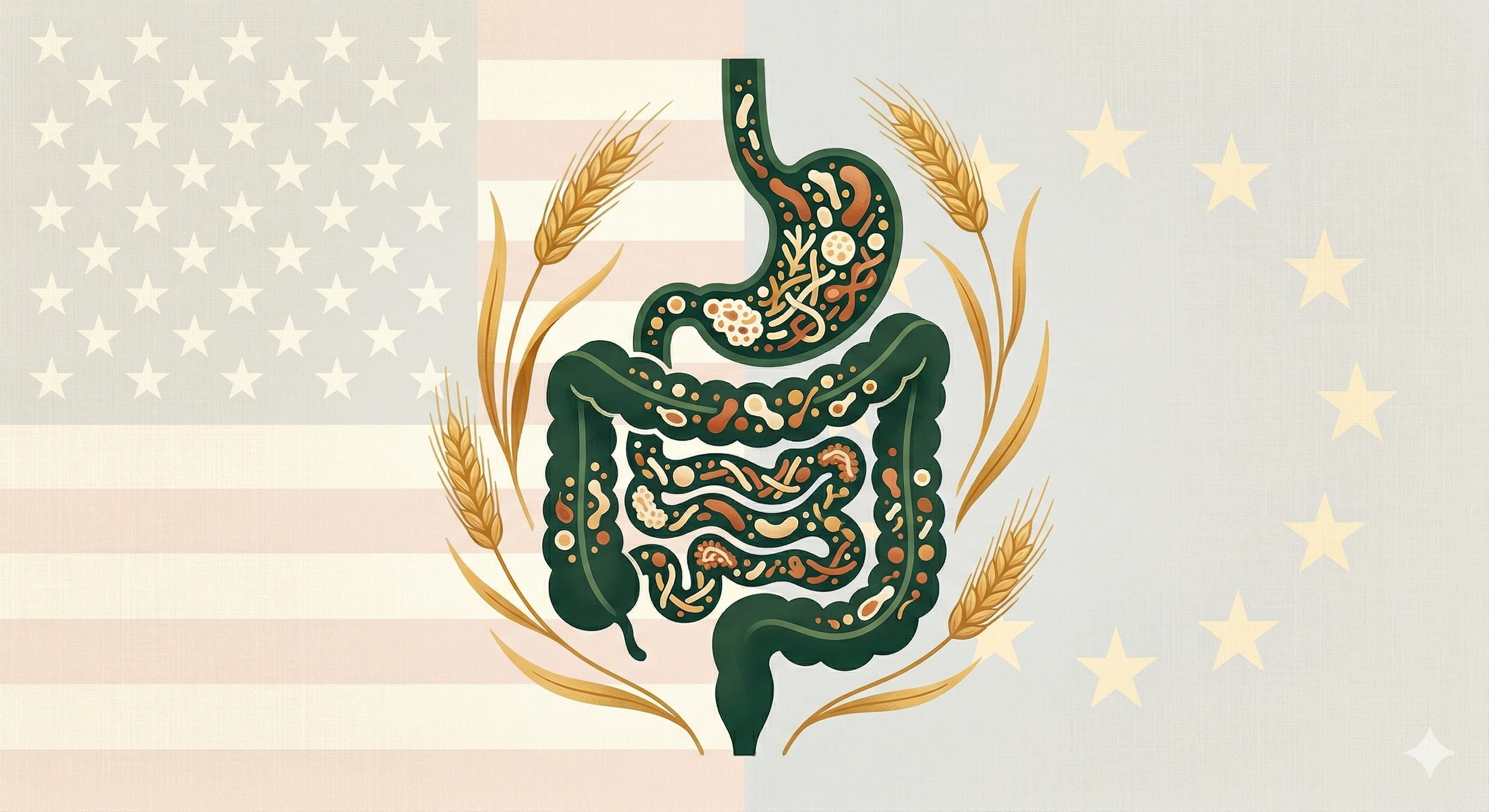
You just got back from Italy. You ate pasta every single day. Bread with every meal. Croissants that would make a Parisian weep with pride. And somehow, miraculously, your stomach was... fine?
Meanwhile, back in the U.S., one slice of sandwich bread and your body declares a full-scale gastrointestinal revolt.
Sound familiar? Because this is one of the most common things I hear, and it is genuinely one of my favorite nutrition puzzles to unpack. The anecdotal evidence is everywhere: people swear they can eat gluten in Europe without any of the bloating, cramping, or misery they experience at home. And while I love a good travel miracle story, the real explanation is way more interesting (and way more nuanced) than "European wheat is just better."
So let's dig in. What is really going on with gluten in the U.S.? Is it really the gluten? Could it be something else entirely? And if your stomach has Opinions about bread, how do you figure out what is causing the drama?
First Things First: What Even Is Gluten?

Wheat, barley, and rye contain two storage proteins called gliadin and glutenin. When flour meets water, these two proteins combine to form gluten, which creates an elastic network that gives bread its chewy texture, helps dough rise, and makes pizza crust do that gorgeous stretchy thing.
Gluten is not inherently evil. For the vast majority of people, it is a perfectly safe, well-tolerated protein. But for some people, it is genuinely problematic, and the reasons range from autoimmune destruction of the small intestine all the way to "we are honestly not 100% sure what is happening, but something is clearly off."
The spectrum of gluten-related disorders includes three main categories: celiac disease, wheat allergy, and non-celiac gluten sensitivity (NCGS). Together, they are estimated to affect roughly 5% of the global population (Taraghikhah et al., BMC Gastroenterology, 2020).
The Big Three: Celiac Disease, Wheat Allergy, and NCGS
Celiac Disease: The Autoimmune Heavy Hitter
Celiac disease is an autoimmune condition in which gluten triggers the immune system to attack the lining of the small intestine. Over time, this damages the finger-like projections called villi that are responsible for nutrient absorption. The global prevalence is roughly 1.4% based on blood tests and 0.7% based on biopsy confirmation (Singh et al., Clinical Gastroenterology and Hepatology, 2018).
Celiac disease requires a genetic predisposition (the HLA-DQ2 or HLA-DQ8 genes), and the list of potential symptoms is wildly long. We are talking about more than 200 recognized symptoms, and they go way beyond digestive complaints. Fatigue, joint pain, brain fog, anemia, osteoporosis, infertility, skin rashes (dermatitis herpetiformis), even neurological symptoms can all be part of the picture. The average diagnostic delay in the U.S. is 6 to 10 years, which is honestly kind of staggering.
Diagnosis: Blood tests for anti-tissue transglutaminase (tTG-IgA) and anti-endomysial antibodies (EMA-IgA), confirmed by a duodenal biopsy showing villous atrophy. Critically, you must still be eating gluten when you get tested. If you go gluten-free before testing, your results may come back falsely negative, and then everyone is confused.
Treatment: A strict, lifelong gluten-free diet. There is no "cheat day" with celiac disease. If you have celiac disease and you eat gluten in Europe, it is still damaging your intestines, even if the pasta is handmade by an Italian grandmother with a rolling pin older than your country.
Wheat Allergy: The Immune System Overreactor
Wheat allergy is an IgE-mediated immune response to proteins in wheat (not exclusively gluten). It can cause classic allergy symptoms: hives, swelling, difficulty breathing, or in severe cases, anaphylaxis. It can also be presented as exercise-induced anaphylaxis triggered specifically by wheat consumption.
Wheat allergy is more common in children, and many outgrow it by adolescence. It is diagnosed through skin prick tests, serum-specific IgE testing, and sometimes oral food challenges (Taraghikhah et al., BMC Gastroenterology, 2020).
Non-Celiac Gluten Sensitivity (NCGS): The Plot Thickens
And then there is NCGS, which is... complicated. NCGS describes people who experience symptoms after eating gluten-containing foods but do not have celiac disease or a wheat allergy. Symptoms can include bloating, abdominal pain, diarrhea, headaches, fatigue, and brain fog.
Around 10% of adults worldwide self-report gluten or wheat sensitivity. But here is where it gets spicy: when researchers put these self-reporters through double-blind, placebo-controlled challenge studies, only about 16 to 30% actually have symptoms specifically triggered by gluten (Biesiekierski, The Lancet, 2025). A systematic review of 10 challenge trials found that only 16% of presumed NCGS patients showed gluten-specific symptoms, and a whopping 40% had a nocebo response, meaning they felt worse on the placebo (Molina-Infante & Carroccio, Clinical Gastroenterology and Hepatology, 2017).
Only 16% of presumed NCGS patients showed gluten-specific symptoms in controlled trials, and 40% reacted just as strongly to a placebo. The "gluten sensitivity" story is more complex than most people realize.
Jargon Buster: The Nocebo Effect
You have probably heard of the placebo effect: you feel better because you believe a treatment is helping, even if it is inactive. The nocebo effect is the flip side. It is when you feel worse because you expect to feel worse. In gluten research, this matters enormously. When participants in controlled trials are given a completely gluten-free placebo but told it might contain gluten, a significant number still report symptoms like bloating and pain. A 2024 multicentre study published in The Lancet Gastroenterology & Hepatology found that the combination of expecting to eat gluten and eating gluten had the largest effect on GI symptoms, reflecting a significant nocebo component (de Graaf et al., 2024). This does not mean the symptoms are imaginary. It means the gut-brain connection is incredibly powerful, and our expectations about food genuinely shape how our digestive system responds.
NCGS remains a diagnosis of exclusion with no validated biomarker. It is real for some people, but the category is almost certainly capturing multiple different conditions under one umbrella.
"But I Can Eat Bread in Europe!"

Which bread do you think represents Europe bread?
OK, so about that vacation bread miracle. There are, in fact, several plausible explanations for why you felt better eating wheat products in Europe, and the answer is probably not as simple as "European wheat is magic." Let's walk through the leading theories.
Theory 1: Different Wheat, Different Gluten Content
There is a real grain (pun intended) of truth here. About 60% of U.S. wheat production is hard red wheat, which is higher in protein and contains more, stronger gluten. In Europe, the dominant varieties tend to be softer wheat with lower overall protein and gluten content (Shewry, Journal of Experimental Botany, 2009); (AGMRC, Wheat Commodity Profile). Hard wheat is great for making fluffy sandwich bread that lasts a week on your counter. Soft wheat makes better pastries and the kinds of crusty, open-crumb artisan loaves you find in European bakeries.
But (and this is a big "but"): pasta is made from durum wheat, which is literally the hardest wheat variety. So, if you were happily crushing bowls of cacio e pepe in Rome without a care in the world, the "softer wheat" theory does not fully explain your experience. American wheat also contains about 10 times more selenium than European varieties (Shewry, 2009). And while the U.S. imports very little wheat, Europe imports roughly 1.1 million tons of American wheat each year (American Farm Bureau Federation, 2024). And it goes both ways: USDA data shows that U.S. imports of hard red winter wheat from the EU hit record highs in 2023/24 due to domestic drought (USDA ERS, 2024). The lines between "American wheat" and "European wheat" are not nearly as clean as the internet would have you believe.
Theory 2: It Might Not Be Gluten. It Might Be Fructans.
This is where the plot twist lives, and honestly, this is one of my favorite pieces of emerging research.
Fructans are a type of fermentable carbohydrate (classified as a FODMAP, which stands for Fermentable Oligosaccharides, Disaccharides, Monosaccharides, and Polyols) that are naturally present in wheat alongside gluten. They are also found in garlic, onions, and certain fruits and vegetables.
Jargon Buster: FODMAPs
FODMAPs are a group of short-chain carbohydrates that are poorly absorbed in the small intestine. When they reach the large intestine, gut bacteria ferment them rapidly, producing gas and drawing water into the bowel. This can cause bloating, pain, and changes in bowel habits in sensitive individuals. The acronym stands for Fermentable Oligosaccharides (fructans and galacto-oligosaccharides), Disaccharides (lactose), Monosaccharides (excess fructose), and Polyols (sugar alcohols like sorbitol and mannitol). Wheat happens to be a significant source of fructans, which means that when people cut out gluten, they are also cutting out fructans. This makes it very difficult to tell which one was causing the problem.
A landmark 2018 study published in Gastroenterology put 59 people with self-reported NCGS through a double-blind, placebo-controlled crossover trial with muesli bars containing either gluten, fructans, or a placebo. The result? Fructans triggered significantly more symptoms than gluten. Gluten performed about the same as the placebo (Skodje et al., Gastroenterology, 2018). Notably, an earlier study by the same research group that originally reported gluten caused symptoms in non-celiacs went back and controlled for FODMAPs first. Once participants were placed on a low-FODMAP diet, gluten challenges produced no additional symptom effects (Biesiekierski et al., Gastroenterology, 2013).
When researchers tested self-reported gluten-sensitive individuals, fructans triggered significantly more symptoms than gluten. Gluten performed about the same as placebo. For many people, the culprit may not be gluten at all.
Why does this matter for the Europe question? Because traditional European breadmaking, particularly sourdough fermentation, significantly reduces fructan content. Research shows that sourdough fermentation can reduce fructans by 69 to 90% depending on the strains used and fermentation time (Boakye et al., Journal of Cereal Science, 2022). Meanwhile, the fast-tracked, commercially yeasted breads that dominate American grocery stores undergo minimal fermentation, meaning those fructans are largely intact (Graça et al., Fermentation, 2021).
So, when you ate that gorgeous artisan sourdough in Paris, you may have been eating bread that was naturally lower in fructans, not because of different wheat, but because of a different process.
Theory 3: Food Additives and Processing Differences
The U.S. permits several bread additives that are banned in the European Union, including potassium bromate (a dough strengthener classified as a possible human carcinogen by the International Agency for Research on Cancer) and azodicarbonamide (a dough conditioner that breaks down into potentially carcinogenic compounds during baking). The EU operates on a precautionary principle: if the safety data is not definitive, the additive is not approved (Regulation (EC) No 1333/2008). The U.S. system, by contrast, allows many additives under the "Generally Recognized As Safe" (GRAS) designation, sometimes without extensive federal review.
Could these additives contribute to digestive discomfort? Possibly. But rigorous, controlled human studies specifically linking these bread additives to the kinds of GI symptoms people report are limited. This is one of those areas where the precautionary principle and the "prove it's harmful first" approach genuinely lead to different consumer experiences. In the EU, an additive stays out until it is proven safe. In the U.S., it stays in until it is proven harmful. That distinction alone shapes what ends up in your bread.
Theory 4: Glyphosate and Agricultural Practices
You will see a lot of claims online that glyphosate (the active ingredient in the herbicide Roundup) is the real villain. In North America, glyphosate is sometimes used as a pre-harvest desiccant on wheat, which means it is sprayed shortly before harvest to dry the crop evenly. This practice can leave residues on the final product. The EU recently restricted glyphosate uses in pre-harvest desiccation.
So how could glyphosate affect gut health? The concern centers on an enzyme called EPSPS (5-enolpyruvylshikimate-3-phosphate synthase), which is part of a metabolic pathway called the shikimate pathway. The shikimate pathway is how plants, fungi, and many bacteria manufacture three essential amino acids: phenylalanine, tyrosine, and tryptophan. Humans do not have this pathway in our own cells, which is a big part of why glyphosate has been considered safe for people. But many of our gut bacteria do have it. Glyphosate works by blocking the EPSPS enzyme, which comes in two classes: Class I (sensitive to glyphosate) and Class II (resistant). The worry is that beneficial gut bacteria often carry Class I EPSPS and could be harmed, while some harmful bacteria carry Class II and would be left unaffected (Walsh et al., Gut Microbes, 2023).
Jargon Buster: The EPSPS Enzyme and Glyphosate
EPSPS is an enzyme that sits at a critical step in the shikimate pathway. Glyphosate works by blocking this enzyme, preventing it from doing its job. When EPSPS is blocked, the organism cannot produce certain essential amino acids and eventually dies. That is how glyphosate kills weeds. The EPSPS enzyme comes in two classes: Class I is sensitive to glyphosate (meaning glyphosate can block it), and Class II is resistant (meaning glyphosate cannot block it). The concern is that many beneficial gut bacteria carry Class I EPSPS and could be harmed by glyphosate, while some harmful bacteria carry Class II EPSPS and would be left unaffected, potentially tipping the balance of the gut microbiome.
In 2020, researchers at the University of Turku in Finland developed a bioinformatics tool to classify the EPSPS enzymes of bacteria in the Human Microbiome Project database. Their finding? Roughly 54% of core human gut bacterial species carry the Class I (glyphosate-sensitive) version of the enzyme (Leino et al., Journal of Hazardous Materials, 2021). That means, at least theoretically, over half of the bacterial species in a healthy gut could be vulnerable to glyphosate exposure.
A separate critical review in Frontiers in Microbiology looked at the broader evidence and found that glyphosate residues on food could cause gut dysbiosis, since opportunistic pathogens tend to be more resistant to glyphosate than beneficial commensal bacteria. However, the authors were clear about the limitations: much of the existing research uses unrealistically high doses, and they concluded that it is currently impossible to draw definitive conclusions about glyphosate's influence on health through gut microbiome changes (Barnett & Gibson, Frontiers in Microbiology, 2020).
A 2023 mouse study from the University of Iowa added another piece to the puzzle. Mice exposed to glyphosate at a dose approximating the U.S. Acceptable Daily Intake (1.75 mg/kg/day) for 90 days showed reduced abundance of beneficial Bifidobacterium pseudolongum and Lactobacillus reuteri, decreased short-chain fatty acid production pathways, and increased markers of intestinal inflammation (Lehman et al., Environmental Toxicology and Pharmacology, 2023). This is a developing area of research that warrants serious attention, but we are not yet at the point of saying, "Glyphosate is definitely why your stomach hurts after eating bread."
Theory 5: The Vacation Effect (a.k.a. Your Brain Is Part of Your Gut)
OK, this one might be the least glamorous explanation, but it is genuinely important. When you are on vacation in Europe, you are likely: walking more (and movement aids digestion), eating smaller portions, eating meals more slowly and mindfully, feeling less stressed, and sleeping differently. The gut-brain axis is a well-established bidirectional communication system between your central nervous system and your enteric nervous system. Stress alone can alter gut motility, increase visceral hypersensitivity, and change the composition of the gut microbiome.
And remember the nocebo effect we discussed earlier? If you believe that U.S. bread will make you sick, your brain and your gut are already primed for that outcome. Research shows that 40% of people with suspected gluten sensitivity experience significant symptoms from a gluten-free placebo they believe might contain gluten.
Wait, Before You Ditch Gluten: What Are You Actually Giving Up?
Here is a conversation that does not happen nearly enough: what happens nutritionally when you eliminate gluten without a medical reason to do so?
Gluten-containing whole grains (wheat, barley, rye, and their relatives like farro, spelt, and bulgur) are genuinely nutritious foods. They are significant sources of dietary fiber, B vitamins (thiamin, riboflavin, niacin, and folate), iron, zinc, magnesium, and selenium. In the U.S., wheat flour is also mandatorily fortified with iron, folic acid, and several B vitamins, which means these products serve as important nutritional safety nets at a population level.
When people switch to a gluten-free diet, they often replace these foods with gluten-free processed products made primarily from refined starches (rice starch, tapioca, potato starch) that tend to be lower in fiber, lower in protein, higher in sugar and fat, and rarely fortified with the same micronutrients. A review of this evidence found that gluten-free diets are commonly deficient in fiber, folate, vitamin B12, vitamin D, iron, zinc, magnesium, and calcium (Vici et al., Clinical Nutrition, 2016).
Fiber deserves a special mention here. Most Americans are already falling short of the recommended 25 to 38 grams of fiber per day, and removing whole wheat products makes that gap even wider. Fiber is critical for healthy bowel function, blood sugar regulation, cholesterol management, and feeding the beneficial bacteria in your gut microbiome. Ironically, unnecessarily going gluten-free may really worsen your gut health by starving the very microbes that keep your digestive system running smoothly.
There is also a cost factor. Gluten-free products typically cost 2 to 3 times more than their conventional counterparts. And the social and psychological burden of maintaining a restricted diet should not be underestimated, either.
Perhaps most importantly, self-selecting a gluten-free diet when you feel better afterward can create a false sense of resolution. If your symptoms improve, it is tempting to conclude that gluten was the problem and move on. But as we have discussed, removing gluten also removes fructans, reduces FODMAPs, and often means cutting out heavily processed foods with additives. You may feel better for reasons that have nothing to do with gluten itself. Meanwhile, the actual underlying issue (whether that is a fructan intolerance, IBS, a gut microbiome imbalance, or another inflammatory condition entirely) goes undiagnosed and unaddressed. In other words, a self-prescribed gluten-free diet can act like a Band-Aid over a deeper problem. The symptom relief feels real because it is real, but it does not tell you why you were symptomatic in the first place. And without that answer, you cannot be sure you are truly treating the root cause rather than just masking it.
And it is worth saying: not everyone who ends up on a gluten-free diet got there by self-diagnosing on TikTok. Sometimes the advice comes from a wellness practitioner without the credentials to make dietary recommendations for medical symptoms. And sometimes, it comes from a licensed medical professional who defaults to "just try going gluten-free" even when the clinical picture does not point to gluten. I have been on the receiving end of this myself. A specialist ran the celiac and wheat allergy tests (both negative), and then, despite the fact that my symptoms were abdominal cavity and diaphragmatic distention... not the bloating, diarrhea, or cramping typically associated with gluten sensitivity... the recommendation was still to try a gluten-free diet (which didn’t work in the end). The "blame gluten" reflex runs deep, even in clinical settings. Well-meaning advice is not the same as well-informed advice, and defaulting to gluten elimination when the symptoms do not fit the profile can delay the workup that leads to the real answer.
Well-meaning advice is not the same as well-informed advice. The "blame gluten" reflex runs deep, even in clinical settings, and defaulting to elimination when the symptoms do not fit the profile can delay the workup that leads to the real answer.
None of this means you should ignore real symptoms. It means that if you suspect a problem, getting a proper diagnosis first is the best way to protect both your health and your nutrition.
You Think Gluten Is the Problem? Here's How to Actually Find Out.
If you are experiencing ongoing digestive symptoms and you suspect gluten, please do not just toss all the bread out of your life and call it a day. The order of operations matters, and skipping steps can make diagnosis harder. Here is the evidence-based approach:
Step 1: See Your Doctor While You're Still Eating Gluten. This is the single most important piece of advice. Celiac disease blood tests (tTG-IgA and EMA-IgA) require that you are actively consuming gluten to be accurate. If you have already gone gluten-free, you may need to do a "gluten challenge" (eating gluten for several weeks before testing), and let me tell you, that is not a fun time for anyone.
Step 2: Rule Out Celiac Disease First. If blood tests are positive, a duodenal biopsy will be recommended to confirm the diagnosis. If celiac is confirmed, a strict lifelong gluten-free diet is non-negotiable. This is not a lifestyle choice; it is a medical treatment.
Step 3: Rule Out Wheat Allergy. Your allergist can test for IgE-mediated wheat allergy with skin prick testing or serum-specific IgE tests.
Step 4: Consider FODMAPs Before Blaming Gluten. If celiac disease and wheat allergy are ruled out, a structured low-FODMAP elimination and reintroduction protocol (ideally guided by a registered dietitian) can help determine whether fructans or other FODMAPs are the real issue. This is a much more targeted approach than a blanket gluten-free diet and can help you avoid unnecessarily restricting foods you can actually tolerate.
Step 5: Work with a Registered Dietitian. (Yes, I am biased, but the evidence backs me up.) A 2025 systematic review in Nutrients found that the online presence of registered nutritionists and dietitians enhances nutritional literacy and plays a crucial role in countering misinformation (Nutrients, 2025; 17(22):3513). Self-diagnosis with "gluten sensitivity" is extremely common, and studies consistently show that most people who self-diagnose do not actually have a gluten-specific problem when tested under controlled conditions.
The Bottom Line
Celiac disease is real, serious, and requires strict gluten avoidance regardless of what continent you are on. Wheat allergy is real and requires avoiding wheat proteins. Non-celiac gluten sensitivity is real for some people, but the category is smaller than most people think, and the actual culprit for many "gluten-sensitive" individuals may be fructans, other FODMAPs, food additives, processing differences, or even the nocebo effect.
The "I can eat bread in Europe" phenomenon is likely driven by a combination of factors: different wheat varieties (though the trade between the U.S. and Europe goes both ways), traditional fermentation practices that reduce fructans, fewer permitted food additives, differences in agricultural chemical use, and the powerful influence of context, stress, and the gut-brain axis.
If you cut out gluten without a confirmed diagnosis, you may be trading one set of problems for another: nutrient deficiencies in fiber, B vitamins, iron, zinc, and magnesium; a less diverse gut microbiome; a higher grocery bill; and perhaps most critically, an undiagnosed underlying condition that a gluten-free diet is merely masking rather than treating.
The most important takeaway? Don't self-diagnose. Get tested. Get tested while you are still eating gluten. Work with a qualified professional who can help you figure out what is actually going on. Because feeling better on a gluten-free diet does not automatically mean gluten was the problem, and the answer you deserve is more specific than "just cut out bread."
Because nuance matters. It always does.
The story of gluten is more complex than "good" or "bad." Your body deserves a real answer, not a trending hashtag.
References
1. Singh P, Arora A, Strand TA, et al. Global prevalence of celiac disease: systematic review and meta-analysis. Clinical Gastroenterology and Hepatology. 2018;16(6):823-836. https://pubmed.ncbi.nlm.nih.gov/29551598/
2. Taraghikhah N, Ashtari S, Asri N, et al. An updated overview of spectrum of gluten-related disorders: clinical and diagnostic aspects. BMC Gastroenterology. 2020;20(1):258. https://doi.org/10.1186/s12876-020-01390-0
3. Biesiekierski JR. Non-coeliac gluten sensitivity. The Lancet. 2025. https://www.thelancet.com/journals/lancet/article/PIIS0140-67362501533-8/abstract
4. Molina-Infante J, Carroccio A. Suspected nonceliac gluten sensitivity confirmed in few patients after gluten challenge in double-blind, placebo-controlled trials. Clinical Gastroenterology and Hepatology. 2017;15(3):339-348. https://pubmed.ncbi.nlm.nih.gov/27523634/
5. de Graaf MCG, Lawton CL, Croden F, et al. The effect of expectancy versus actual gluten intake on gastrointestinal and extra-intestinal symptoms in non-coeliac gluten sensitivity. The Lancet Gastroenterology & Hepatology. 2024;9(2):110-123. https://pubmed.ncbi.nlm.nih.gov/38040019/
6. Skodje GI, Sarna VK, Minelle IH, et al. Fructan, rather than gluten, induces symptoms in patients with self-reported non-celiac gluten sensitivity. Gastroenterology. 2018;154(3):529-539. https://pubmed.ncbi.nlm.nih.gov/29102613/
7. Biesiekierski JR, Peters SL, Newnham ED, Rosella O, Muir JG, Gibson PR. No effects of gluten in patients with self-reported non-celiac gluten sensitivity after dietary reduction of fermentable, poorly absorbed, short-chain carbohydrates. Gastroenterology. 2013;145(2):320-328. https://pubmed.ncbi.nlm.nih.gov/23648697/
8. Boakye PG, et al. Impact of sourdough fermentation on FODMAPs and amylase-trypsin inhibitor levels in wheat dough. Journal of Cereal Science. 2022;108:103574. https://www.sciencedirect.com/science/article/abs/pii/S0733521022001631
9. Graça C, Lima A, Raymundo A, Sousa I. Sourdough fermentation as a tool to improve the nutritional and health-promoting properties of its derived products. Fermentation. 2021;7(4):246. https://doi.org/10.3390/fermentation7040246
10. Shewry PR. Wheat. Journal of Experimental Botany. 2009;60(6):1537-1553. https://doi.org/10.1093/jxb/erp058
11. Wheat. Agricultural Marketing Resource Center (AGMRC). https://www.agmrc.org/commodities-products/grains-oilseeds/wheat
12. Wheat exports: the balancing act of U.S. wheat. American Farm Bureau Federation Market Intel. https://www.fb.org/market-intel/wheat-exports-the-balancing-act-of-u-s-wheat
13. Sowell A. U.S. wheat imports reach 6-year high. USDA Economic Research Service, Charts of Note. January 10, 2024. https://www.ers.usda.gov/data-products/charts-of-note/chart-detail?chartId=108215
14. Regulation (EC) No 1333/2008 of the European Parliament and of the Council on food additives. Official Journal of the European Union. https://eur-lex.europa.eu/legal-content/EN/TXT/PDF/?uri=CELEX:02008R1333-20231005
15. Walsh L, Hill C, Ross RP. Impact of glyphosate (Roundup) on the composition and functionality of the gut microbiome. Gut Microbes. 2023;15(2):2263935. https://doi.org/10.1080/19490976.2023.2263935
16. Barnett JA, Gibson DL. Separating the empirical wheat from the pseudoscientific chaff: a critical review of the literature surrounding glyphosate, dysbiosis and wheat-sensitivity. Frontiers in Microbiology. 2020;11:556729. https://pmc.ncbi.nlm.nih.gov/articles/PMC7545723/
17. Leino L, Tall T, Helander M, Saloniemi I, Saikkonen K, Ruuskanen S, Puigbò P. Classification of the glyphosate target enzyme (5-enolpyruvylshikimate-3-phosphate synthase) for assessing sensitivity of organisms to the herbicide. Journal of Hazardous Materials. 2021;408:124556. https://doi.org/10.1016/j.jhazmat.2020.124556
18. Lehman PC, Cady N, Ghimire S, Shahi SK, Shrode RL, Lehmler HJ, Mangalam AK. Low-dose glyphosate exposure alters gut microbiota composition and modulates gut homeostasis. Environmental Toxicology and Pharmacology. 2023;100:104149. https://doi.org/10.1016/j.etap.2023.104149
19. Vici G, Belli L, Biondi M, Polzonetti V. Gluten free diet and nutrient deficiencies: a review. Clinical Nutrition. 2016;35(6):1236-1241. https://pubmed.ncbi.nlm.nih.gov/27211234/
20. How do nutritionists/dietitians use social media to communicate with their public? Global perspectives on social media practices: a systematic review. Nutrients. 2025;17(22):3513. https://www.mdpi.com/2072-6643/17/22/3513