Spit Take: What At-Home Cortisol Tests Actually Tell You
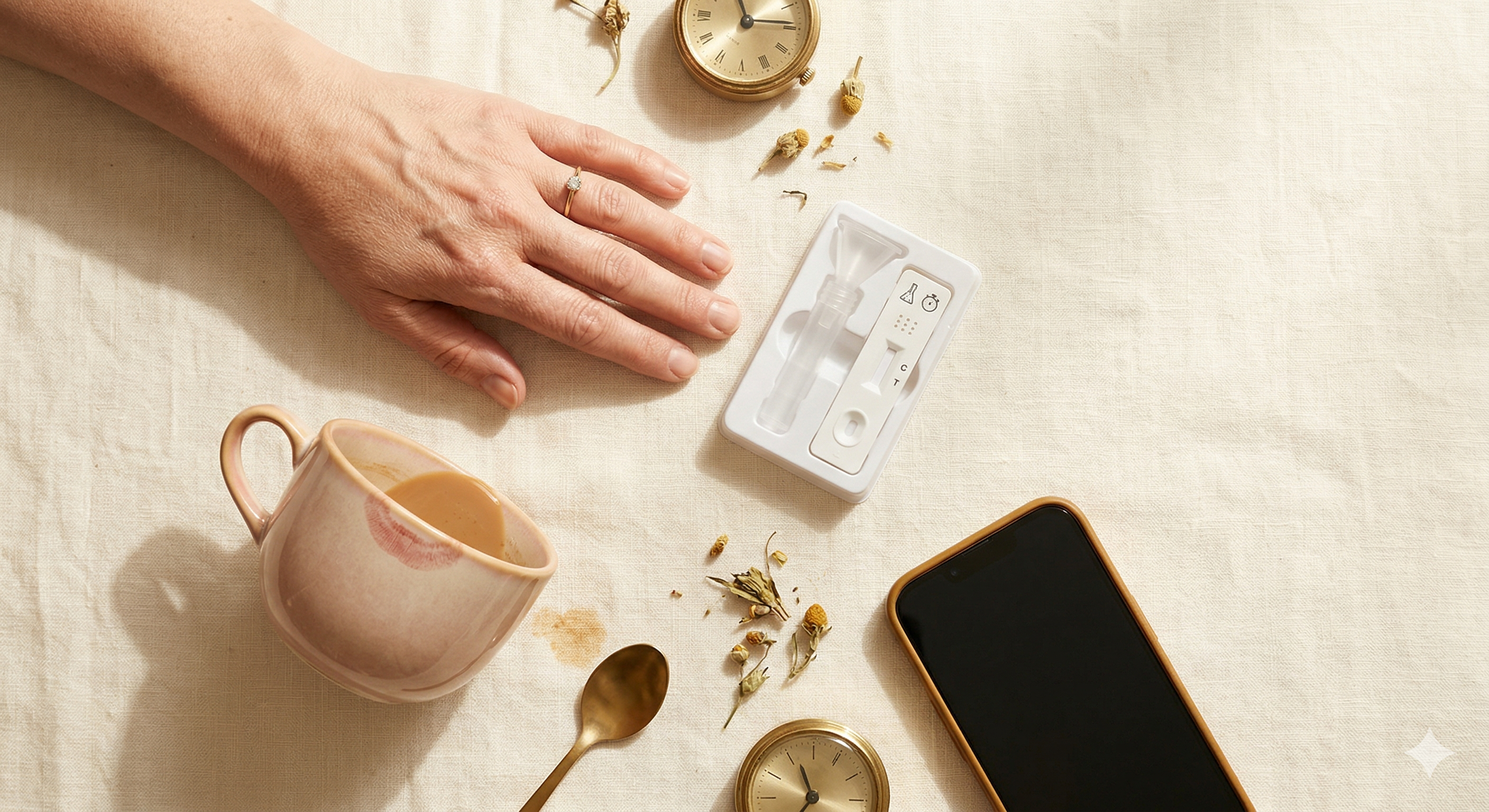
Cortisol has officially become the wellness world’s favorite villain. Blame it on your fatigue, your belly fat, your 2 AM doom-scrolling, your inability to resist the work snack bowl. Cortisol is the answer, apparently. And now, a growing army of at-home testing kits and wearable gadgets are ready to prove it, all from the comfort of your bathroom.
But is that $99–$327 cortisol monitor actually telling you something useful? Or is it just a very expensive way to watch a number fluctuate while you stress about whether you’re too stressed?
Let’s dig in, with evidence, a healthy dose of nuance, and our full Nuanced Nutritionist energy.
First: Cortisol Is Real, and It Actually Matters
Let’s start by giving cortisol its due. It’s not just the “stress hormone”; it’s your body’s master regulator of energy, inflammation, blood sugar, immune function, and your sleep-wake cycle. Produced by the adrenal glands under direction from the hypothalamic-pituitary-adrenal (HPA) axis, cortisol follows a predictable daily rhythm: high in the morning to get you moving, then tapering off throughout the day, hitting its lowest point near bedtime (Kaur et al., 2026).
This pattern is called the diurnal cortisol slope, and research has increasingly shown that it’s not just an interesting biological quirk; it has real health implications. A systematic review and meta-analysis found that a flatter diurnal slope (meaning cortisol doesn’t drop much from morning to night) is associated with poorer physical and mental health outcomes across multiple disease categories (Adam & Kumari, 2017). More recently, a 2024 commentary in the journal Sleep highlighted that even subtle disruptions in cortisol’s daily rhythm, even within what’s considered the “normal” reference range, can have downstream effects on metabolic health, including blood pressure, weight, and glucose metabolism (Liu, 2024).
In other words: your cortisol pattern over the day matters more than a single data point. Which is actually relevant to how we evaluate these products.
The Landscape: Who’s Selling Cortisol Insight?
The at-home cortisol market has exploded, and there’s a spectrum of approaches, each with different methodologies, price points, and (very different) levels of clinical utility.
🔬 Mail-In Lab Tests (Send It and Wait)
ZRT Laboratory’s Diurnal Cortisol (Cx4)
ZRT Laboratory’s Diurnal Cortisol (Cx4) is one of the more clinically respected options in this category. It measures cortisol at four time points throughout a single day (morning, noon, evening, and bedtime) using saliva samples you collect at home and mail to their CLIA-certified lab. You get results in 5–7 business days. This 4-point approach gives you a cortisol curve, not just a snapshot, and is considered methodologically sound for assessing HPA axis function (Walk-In Lab, 2025).
Everlywell’s Sleep & Stress Test
Everlywell’s Sleep & Stress Test takes a similar approach (saliva-based, mail-in, CLIA-certified lab processing), measuring cortisol alongside DHEA-S. It’s accessible and reasonably priced, and it includes a single morning-only collection for some panels, which is less comprehensive than a 4-point diurnal curve but still relevant.
DUTCH Test (Dried Urine Test for Comprehensive Hormones)
DUTCH Test by Precision Analytical is the Cadillac of at-home hormone testing (and yes, it’s priced accordingly). It uses dried urine samples to measure not just cortisol, but cortisol metabolites, sex hormones, DHEA-S, melatonin, and oxidative stress markers, giving a broader picture of how your body is making, using, and breaking down hormones. It includes the Cortisol Awakening Response (CAR), which is an especially informative metric (Stalder et al., 2025). The downside: it’s complex and really does require a trained practitioner to interpret meaningfully.
⚡ Real-Time, Instant-Results Devices
This is where things get genuinely interesting, and where the nuance gets real.
Eli Health’s Hormometer™
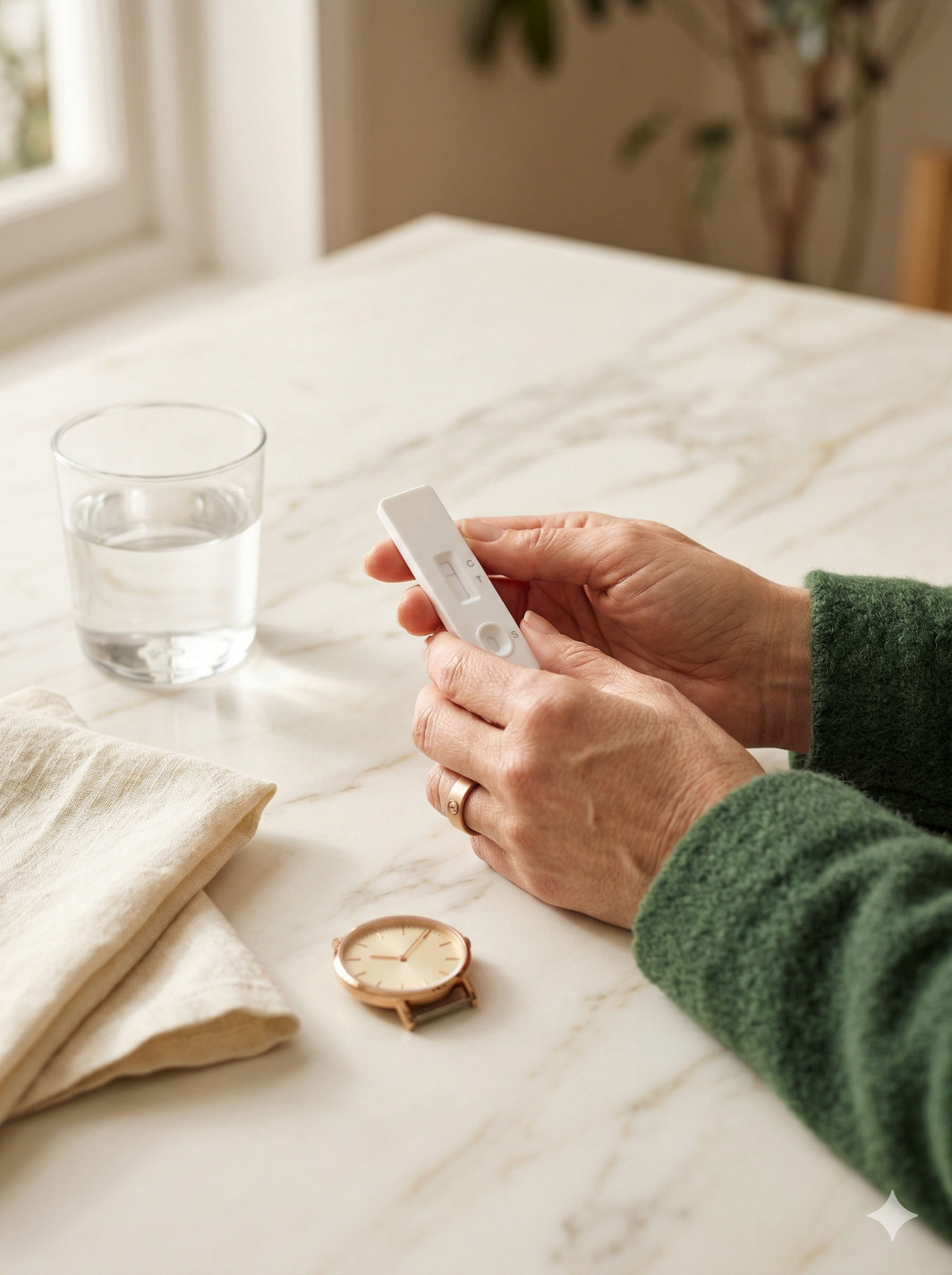
Eli Health’s Hormometer™ is the new kit on the block, offering a saliva-based lateral flow strip you scan with your iPhone for results in about 20 minutes. It claims lab-grade accuracy with a 97% correlation to FDA-approved gold standard methods, and it’s designed for frequent, repeated use. Think multiple tests per day over weeks and months to build out your personal cortisol pattern. The Insights Pack runs $199 for 24 tests over 3 months (~$8.29/test); an 8-test Discovery Pack is $99. It’s iPhone-only (for now) and uses AI-powered interpretation in the app.
On the tech side, lateral flow immunoassay (LFIA) technology, the same basic approach behind COVID rapid tests, has been validated for cortisol detection in research settings (Ahmed et al., 2024). And smartphone-based readers for these strips are increasingly sophisticated, with published data supporting their accuracy for detecting salivary cortisol fluctuations (Mitsuishi et al., 2023).
The Science Behind Spit: Is Salivary Cortisol Legit?

Here’s something genuinely worth knowing: salivary cortisol is a real, research-validated biomarker, and it has some advantages over blood testing.
In blood, only about 5–10% of cortisol circulates in its free (biologically active) form; the rest is bound to proteins. Saliva captures that free cortisol, what your tissues are actually responding to, without requiring a needle or a clinical setting (Salimetrics, n.d.). Research consistently shows high correlations between salivary and serum cortisol across multiple collection methods, and a 2005 study found that salivary cortisol via enzyme immunoassay is actually preferable to total serum cortisol for assessing dynamic HPA axis activity (Gozansky et al., 2005, as cited in Integrative Pro, 2023).
A 2024 systematic review further confirmed that salivary cortisol collection in community settings is valid for research purposes, with the important caveat that methodological consistency matters enormously (Dong et al., 2025). Timing, what you ate beforehand, recent exercise, emotional state, and collection technique all significantly affect results. This isn’t a minor footnote: in one study, time of day alone accounted for 72% of the variance in salivary cortisol levels (Adam & Kumari, 2017). Seventy-two percent. That’s not noise; that’s basically the whole signal.
What’s the Catch? (There’s Always a Catch)
Here’s where we put on our Nuanced Nutritionist hat and get honest.
1. Cortisol doesn’t sit still, like, at all.
Cortisol is exquisitely reactive. It can spike in response to a difficult conversation, a strong cup of coffee, a hard workout, a blood sugar dip, or just the cortisol awakening response (CAR), a normal 50–75% surge in the first 30–45 minutes after you wake up (Stalder et al., 2025). Sleep restriction increases late-afternoon cortisol, circadian misalignment blunts the diurnal rhythm, and night-shift work has profound effects on the entire HPA axis pattern (O’Byrne et al., 2021; Andreadi et al., 2025).
What this means practically: a single test, or even two tests taken on one day, is a snapshot of a moving target. It may or may not be representative of your overall pattern. This is why the research-validated approaches use multiple samples across multiple days.
2. Population reference ranges are blunt instruments.
Most consumer tests compare your cortisol to a range derived from a general population. But “normal” varies enormously between individuals, and whether your level is meaningful depends on your baseline, your symptom context, your time of collection, and your clinical picture. A number in the “normal” range on a consumer app can coexist with real HPA axis dysfunction, and a number outside the range might mean nothing significant at all.
3. Wellness insights ≠ medical diagnosis.
The Eli Health Hormometer™ is explicitly a wellness device. Its own disclaimer states it is “not intended to diagnose, treat, cure, prevent, or manage any disease or medical condition, including adrenal disorders such as Addison’s disease, Cushing’s syndrome, or medication management” (Eli Health, 2025). This isn’t boilerplate; it’s a meaningful distinction. If you’re concerned about actual adrenal pathology, you need a clinical workup, not an app.
4. The “white coat effect” argument cuts both ways.
One of the legitimate selling points of at-home testing is that collecting cortisol at home, in your natural environment, avoids the physiological stress response that can artificially elevate cortisol in clinical settings. That’s real. But at-home collection also means zero standardization of conditions: what you did that morning, whether you slept well, what you ate, how the news made you feel. Research settings that use at-home saliva collection invest heavily in standardized protocols precisely because context matters so much (Dong et al., 2025).
When Consumer Cortisol Testing Can Actually Add Value
That said, I don’t want to dismiss these tools entirely. There are legitimate use cases:
Pattern recognition over time. The Hormometer™ approach (frequent testing across weeks and months) is actually conceptually aligned with how cortisol researchers think about meaningful data. A 14-day longitudinal study using at-home saliva collection demonstrated the feasibility of capturing real-world cortisol-sleep bidirectional relationships in ways clinical snapshots can’t (Liu, 2024). If someone consistently tests at the same time, under similar conditions, the trend data can be genuinely informative.
Biofeedback and behavior change. For clients who benefit from concrete data to motivate lifestyle changes, seeing their cortisol trend shift in response to improved sleep hygiene or stress management can be a powerful reinforcer. This isn’t trivial: behavior change is hard, and tools that create feedback loops can help.
Complementing clinical care. For clients already working with a knowledgeable provider (hi!), frequent at-home data could supplement clinical testing and provide context for symptoms between appointments. This requires a practitioner who can help interpret the data, which is exactly why people like me exist.
Lifestyle pattern exploration. The Eli app’s structured “testing challenges” (testing before and after caffeine, workouts, stress events) is actually a reasonable way to use this kind of tool. Not to diagnose, but to identify personal patterns that might inform behavior.
The Bottom Line from Your Nuanced Nutritionist

Consumer cortisol tools (from the Hormometer™ to ZRT’s 4-point test to the comprehensive DUTCH) occupy a spectrum of rigor and usefulness. Salivary cortisol is a legitimate biomarker, the technology has improved significantly, and the underlying science of diurnal cortisol patterns is real and meaningful.
But here’s what I want you to walk away with:
A number without context is just a number. Cortisol is not a simple read-and-respond biomarker. It’s a dynamic, context-dependent signal that reflects sleep, stress, exercise, nutrition, circadian rhythm, and dozens of other variables. Tracking trends over time with consistent methodology? That’s where the value lies. Checking your cortisol once and Googling what it means? Less so.
If you’re curious about your stress physiology and want data to inform lifestyle decisions (sleep, exercise timing, caffeine, stress management), a consumer tool used thoughtfully and consistently can give you useful feedback. But please bring that data to a qualified provider, not just the app’s AI, before making significant changes.
And if you’re genuinely concerned about adrenal dysfunction, fatigue you can’t explain, or symptoms that feel more medical than lifestyle-related, skip the consumer kit and get a proper clinical workup. Some things still need a doctor.
Have questions about cortisol, stress, hormones, or how nutrition fits into all of it? I work with women virtually across North Carolina and beyond. Book a free discovery call or follow along on Instagram for more evidence-based, zero-BS nutrition content.
References
Adam, E. K., & Kumari, M. (2017). Diurnal cortisol slopes and mental and physical health outcomes: A systematic review and meta-analysis. Psychoneuroendocrinology, 83, 25–41. https://pmc.ncbi.nlm.nih.gov/articles/PMC5568897/
Ahmed, T., Powner, M. B., Qassem, M., & Kyriacou, P. A. (2024). Rapid optical determination of salivary cortisol responses in individuals undergoing physiological and psychological stress. Scientific Reports, 14, 31578. https://doi.org/10.1038/s41598-024-69466-5
O’Byrne, N. A., Yuen, F., Butt, W. Z., & Liu, P. Y. (2021). Sleep and circadian regulation of cortisol: A short review. Current Opinion in Endocrine and Metabolic Research, 18, 178–186. https://doi.org/10.1016/j.coemr.2021.03.011
Eli Health. (2025). Hormometer™ — Instant cortisol monitoring system [Product page]. https://eli.health/products/cortisol
Integrative Pro. (2023). Salivary cortisol tests accuracy. https://integrativepro.com/blogs/articles/salivary-cortisol-tests-how-accurate-are-they
Andreadi, A., Andreadi, S., Todaro, F., Ippoliti, L., Bellia, A., Magrini, A., Chrousos, G. P., & Lauro, D. (2025). Modified cortisol circadian rhythm: The hidden toll of night-shift work. International Journal of Molecular Sciences, 26(5), 2090. https://doi.org/10.3390/ijms26052090
Stalder, T., Oster, H., Abelson, J. L., Huthsteiner, K., Klucken, T., & Clow, A. (2025). The cortisol awakening response: Regulation and functional significance. Endocrine Reviews, 46(1), 43–59. https://doi.org/10.1210/endrev/bnae024
Liu, P. Y. (2024). Rhythms in cortisol mediate sleep and circadian impacts on health. Sleep, 47(9), zsae151. https://doi.org/10.1093/sleep/zsae151
Mitsuishi, H., Okamura, H., Moriguchi, Y., & Aoki, Y. (2023). The validity of the salivary cortisol analysis method using the Cube Reader in Japanese university students. Japanese Psychological Research, 65, 369–378. https://doi.org/10.1111/jpr.12402
Dong, F., Sefcik, J. S., Euiler, E., & Hodgson, N. A. (2025). Measuring salivary cortisol in biobehavioral research: A systematic review and methodological considerations. Brain, Behavior, & Immunity – Health, 43, 100936. https://doi.org/10.1016/j.bbih.2024.100936
Precision Analytical. (n.d.). DUTCH Complete test kits. https://dutchtest.com/dutch-complete
Salimetrics. (n.d.). Salivary cortisol analysis. https://salimetrics.com/analyte/salivary-cortisol/
Kaur, J., Gandhi, J., & Sharma, S. (2026). Physiology, cortisol. In StatPearls. StatPearls Publishing. http://www.ncbi.nlm.nih.gov/books/NBK538239/
Walk-In Lab. (2025). Buy diurnal cortisol (Cx4) — ZRT test kit. https://www.walkinlab.com/products/view/diurnal-cortisol-cx4-zrt-test-kit