The Tongue Scraper Manifesto: A Nutritionist’s Unlikely First Assignment
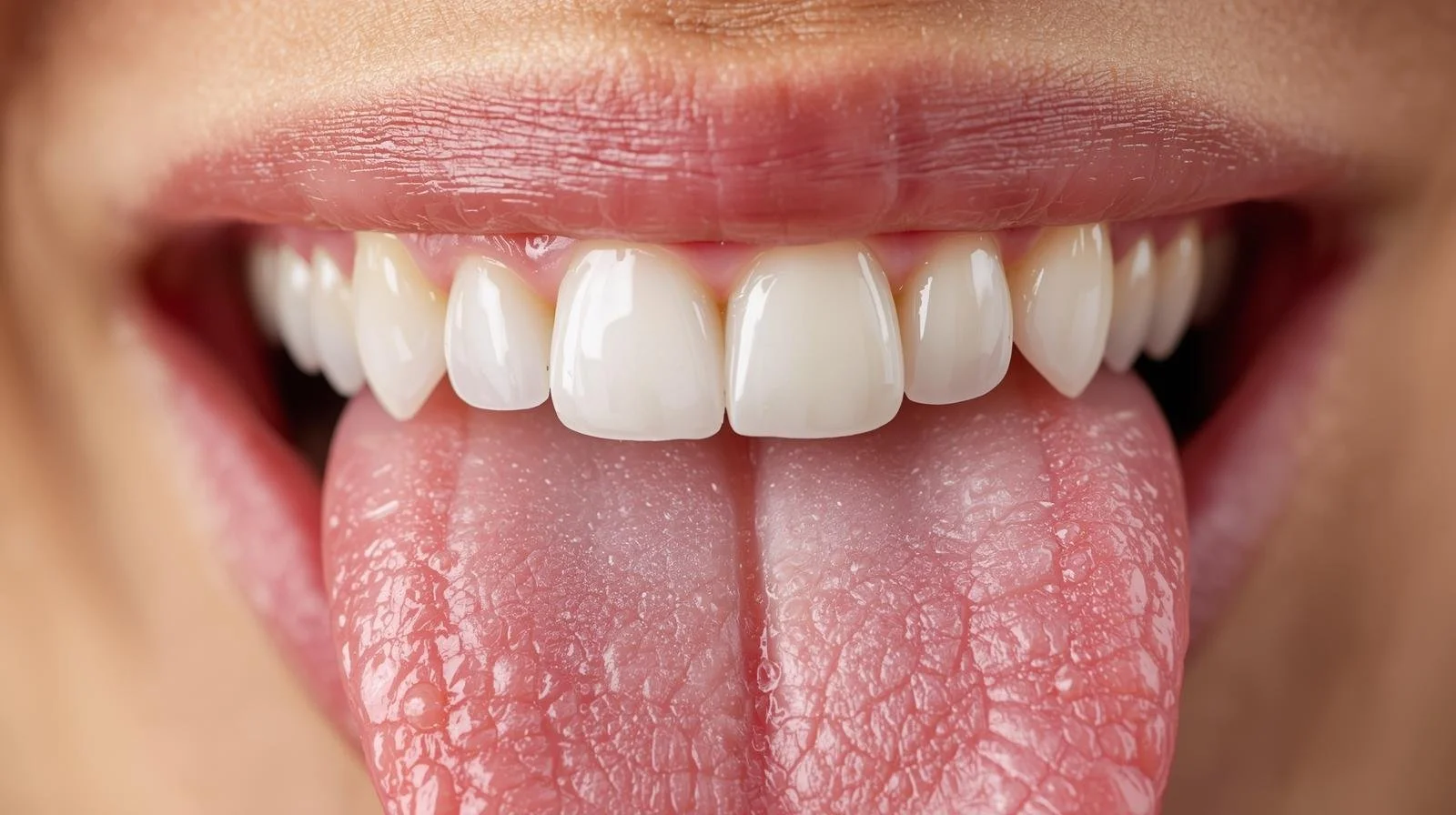
Why does your nutritionist care about the cleanliness of your tongue?
The Oral Microbiome: Your Body's Most Underrated First Responder
Listen, I know what you're thinking when I hand you a tongue scraper at our first nutrition counseling session: "I came here to talk about diet, not my tongue hygiene. Did I accidentally book a dental appointment?"
I get it. It seems weird. But here's the thing: before we dive into nutrient needs and meal prep strategies, we need to talk about the 700+ species of bacteria currently throwing a house party in your mouth (1). And trust me, if that party gets out of control, all the kale smoothies in the world won't save you.
Your Mouth: The Gateway Drug to Health (Or Disease)
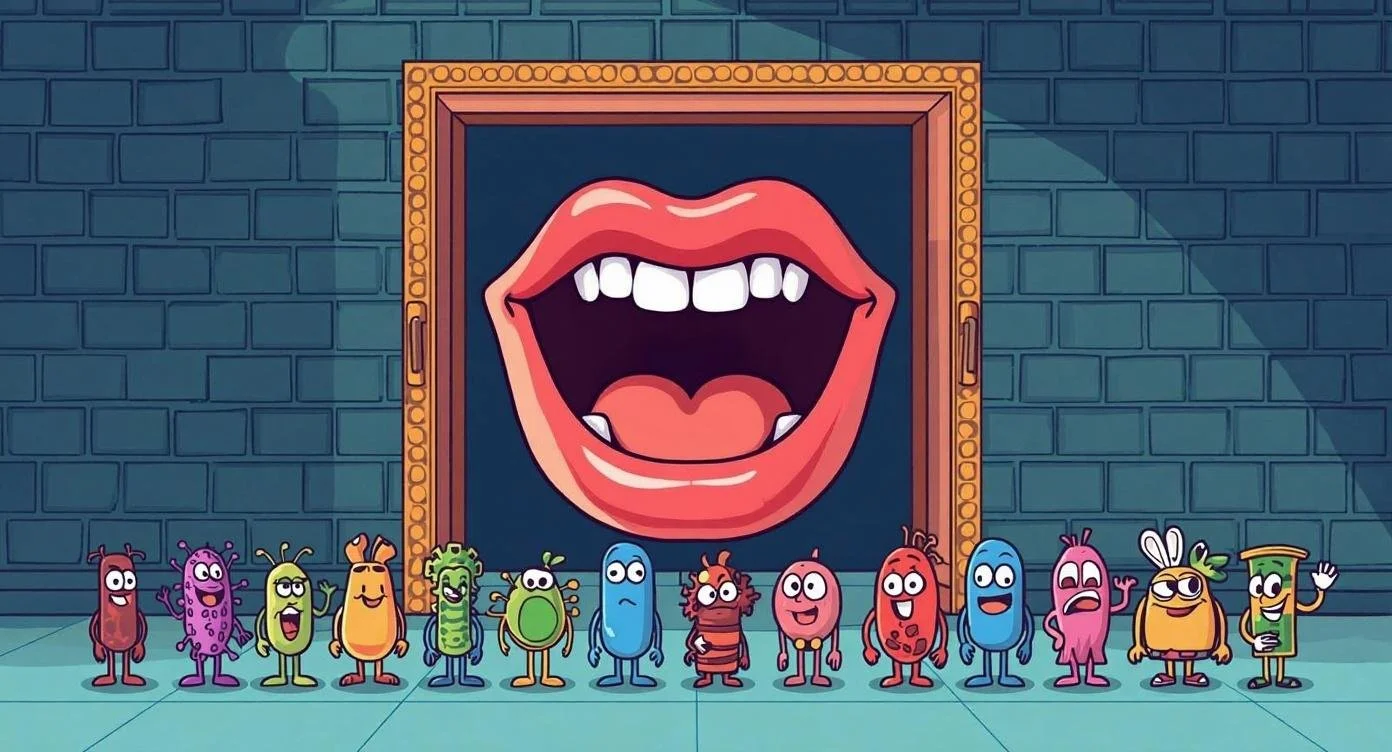
What lives in the mouth goes in the body. The oral microbiome gets ingested just like your food.
Think of your mouth as the bouncer at the club of your body. It decides who gets in, who gets kicked out, and—most importantly—it sets the tone for the whole establishment. The oral cavity hosts the second largest and most diverse microbiome in your body (second only to your gut), with bacteria accounting for approximately 26% of all bacteria residing in your body (2).
When this bouncer is doing their job well—maintaining what scientists call "eubiosis" (a fancy word for bacterial harmony)—your oral microbiome actually helps you. It balances pH levels, guards against pathogens, and supports your immune system (3). But when things go sideways and dysbiosis sets in? Well, that's when the troublemakers start running the show.
The Mouth-Body Connection: It's Not Just Dental Drama
Here's where it gets really interesting (and slightly alarming, but in a motivating way, I promise). Research increasingly shows connections between oral bacteria and systemic diseases, including cardiovascular disease, diabetes, respiratory illness, and even some autoimmune conditions (4,5).

Mouth health is directly connected to body health.
A 2019 study published in the Journal of Oral Microbiology discovered that bacterial populations from your mouth literally make their way to your gut microbiota (6). Every time you swallow—which you do about 2,000 times per day, by the way—you're sending oral bacteria on a field trip to your digestive tract. So yeah, what happens in your mouth doesn't stay in your mouth.
The research on diet's impact on the oral microbiome is particularly fascinating. Studies show that Western dietary patterns—characterized by processed foods, refined sugars, and farmed meats—alter oral microbial communities, increasing the representation of acid-producing and acid-tolerant organisms while promoting periodontal pathogens (7).
“Basically, your diet doesn’t just feed you; it feeds your mouth bugs, and those bugs have opinions about what you’re serving them.”
Enter the Tongue Scraper: Your New Best Friend
Oral cleaning kit: tongue scraper, floss, toothbrush, and toothpaste.
Now, about that tongue scraper I'm so annoyingly enthusiastic about. Your tongue is basically a shag carpet for bacteria. All those little bumps (papillae) that help you taste your morning coffee? They're also perfect hiding spots for bacteria, food debris, and dead cells.
Research published in PMC found that tongue scraping twice daily for seven days significantly reduced Mutans streptococci and Lactobacilli bacteria—the troublemakers known to cause bad breath and dental decay (8). A 2004 study even found that scraping was more effective than brushing at removing odor-causing bacteria (9).
The benefits include:
Improved taste perception: Your taste buds can actually do their job when they're not buried under bacterial debris (8)
Reduced bad breath: By removing volatile sulfur compound-producing bacteria (10)
Lower bacterial load: Which means less opportunity for those bacteria to cause problems elsewhere in your body (11)
Better overall oral hygiene: When combined with brushing and flossing, tongue scraping provides comprehensive oral care (12)
Flossing: The Great Debate (Spoiler: Just Do It)
Ah, flossing. The subject of headlines like "Feeling Guilty About Not Flossing? Maybe There's No Need" that made everyone celebrate prematurely. Let's clear this up: the lack of long-term, large-scale randomized controlled trials on flossing doesn't mean flossing doesn't work. It means those studies are incredibly expensive and logistically challenging (13).
What we do have is solid short-term evidence. A meta-analysis found that flossing plus toothbrushing reduced gingivitis (mild gum disease) significantly better than toothbrushing alone (14). Another study published in the Journal of Clinical Periodontology found that people who flossed once or more per week were 17% less likely to have gum disease, and flossing one or more days per week reduced the risk for periodontitis by 23% compared to not flossing at all (15).
Here's the thing: there's virtually no evidence that flossing harms you, it's low-cost, and dentists can almost always tell when you don't do it (13). As the National Institute of Dental and Craniofacial Research points out, timely removal of plaque from between teeth is essential, whether with floss or interdental brushes (16).
Why This Comes FIRST in Your Nutrition Journey

Why focus on oral hygiene at the start of nutrition counseling?
You might be wondering: "Okay, but why are we starting with oral hygiene instead of, like, actual nutrition?"
Great question! Here's my reasoning:
1. It's a small, achievable win. Adding flossing and tongue scraping to your routine takes maybe 3 minutes total. It builds momentum and creates a sense of accomplishment before we tackle bigger dietary changes.
2. It creates awareness. When you start paying attention to your oral health, you become more mindful of how your food choices affect your mouth—and by extension, your whole body.
3. It addresses inflammation at the source. Periodontal disease is characterized by chronic inflammation (17). If we're trying to improve your metabolic health, reduce systemic inflammation, or manage conditions like diabetes or cardiovascular disease, addressing oral inflammation is actually a strategic starting point.
4. It primes your microbiome. By establishing a healthier oral microbial environment before we change your diet, we're setting the stage for those dietary changes to be more effective. Think of it as preparing the soil before planting seeds.
5. The oral-gut axis is real. Research on the oral-gut-brain axis shows that nutrition can alter several aspects of this complex system, and maintaining oral health supports the entire axis (6). Your mouth microbes are in constant communication with your gut microbes, and we want that conversation to be productive, not toxic.
The Final Rinse
I know it seems unconventional to start a nutrition program with a tongue scraper and a floss lecture. But the science increasingly shows that oral health and systemic health are inseparable (18,19). The American Dental Association has even passed resolutions recognizing that dentistry is essential healthcare and oral health should be considered an essential element of general health and well-being (20).
So yes, before we optimize your protein intake or strategize your meal timing, we're going to establish a solid oral healthcare routine. Because you can eat all the nutrient-dense, anti-inflammatory, microbiome-supporting foods in the world, but if your mouth is a microbial war zone, you're fighting an uphill battle.
Plus, think of it this way: when you show up to our next session and tell me you've been consistently flossing and tongue scraping, I'll know you're serious about making changes. And that, my friend, is worth celebrating—with fresh breath and a clean tongue, naturally.
Now go scrape that tongue. Your entire body will thank you.
Disclaimer: This blog post is for educational purposes only and is not a substitute for professional medical or dental advice. Always consult with your healthcare providers regarding your specific health needs.
References
Santonocito S, Giudice A, Polizzi A, et al. A Cross-Talk between Diet and the Oral Microbiome: Balance of Nutrition on Inflammation and Immune System's Response during Periodontitis. Nutrients. 2022;14(12):2426. Published 2022 Jun 11. doi:10.3390/nu14122426
Schamarek I, Anders L, Chakaroun RM, Kovacs P, Rohde-Zimmermann K. The role of the oral microbiome in obesity and metabolic disease: potential systemic implications and effects on taste perception. Nutr J. 2023;22(1):28. Published 2023 May 27. doi:10.1186/s12937-023-00856-7
Wade WG. The oral microbiome in health and disease. Pharmacol Res. 2013;69(1):137-143. doi:10.1016/j.phrs.2012.11.006
Chandra Nayak S, Latha PB, Kandanattu B, Pympallil U, Kumar A, Kumar Banga H. The Oral Microbiome and Systemic Health: Bridging the Gap Between Dentistry and Medicine. Cureus. 2025;17(2):e78918. Published 2025 Feb 12. doi:10.7759/cureus.78918
MDPI Microorganisms. Oral Microbiome: A Review of Its Impact on Oral and Systemic Health. 2024;12(9):1797. Published 2024 Aug 29. https://www.mdpi.com/2076-2607/12/9/1797
Kerstens R, Ng YZ, Pettersson S, Jayaraman A. Balancing the Oral-Gut-Brain Axis with Diet. Nutrients. 2024;16(18):3206. Published 2024 Sep 22. doi:10.3390/nu16183206
Santonocito S, Polizzi A, Isola G. The Impact of Diet and Nutrition on the Oral Microbiome. Adv Exp Med Biol. 2025;1472:53-69. doi:10.1007/978-3-031-79146-8_4
Almas K, Al-Sanawi E, Al-Shahrani B. The effect of tongue scraper on mutans streptococci and lactobacilli in patients with caries and periodontal disease. Odontostomatol Trop. 2005;28(109):5-10. https://pubmed.ncbi.nlm.nih.gov/16032940/
Pedrazzi V, Sato S, de Mattos Mda G, Lara EH, Panzeri H. Tongue-cleaning methods: a comparative clinical trial employing a toothbrush and a tongue scraper. J Periodontol. 2004;75(7):1009-1012. doi:10.1902/jop.2004.75.7.1009
Choi HN, Cho YS, Koo JW. The Effect of Mechanical Tongue Cleaning on Oral Malodor and Tongue Coating. Int J Environ Res Public Health. 2021;19(1):108. Published 2021 Dec 23. doi:10.3390/ijerph19010108
Stephen AS, Dhadwal N, Nagala V, et al. Interdental and subgingival microbiota may affect the tongue microbial ecology and oral malodour in health, gingivitis and periodontitis. J Periodontal Res. 2021;56(6):1174-1184. doi:10.1111/jre.12931
Bordas A, McNab R, Staples AM, Bowman J, Kanapka J, Bosma MP. Impact of different tongue cleaning methods on the bacterial load of the tongue dorsum. Arch Oral Biol. 2008;53 Suppl 1:S13-S18. doi:10.1016/S0003-9969(08)70004-9
NIH News in Health. Don't Toss the Floss! Updated June 17, 2024. https://newsinhealth.nih.gov/2016/11/don-t-toss-floss
Poklepovic T, Worthington HV, Johnson TM, et al. Interdental brushing for the prevention and control of periodontal diseases and dental caries in adults. Cochrane Database Syst Rev. 2013;(12):CD009857. Published 2013 Dec 18. doi:10.1002/14651858.CD009857.pub2
Cepeda MS, Weinstein R, Blacketer C, Lynch MC. Association of flossing/inter-dental cleaning and periodontitis in adults. J Clin Periodontol. 2017;44(9):866-871. doi:10.1111/jcpe.12765
National Institute of Dental and Craniofacial Research. Ask the Expert: Do I Really Need to Floss? https://www.nidcr.nih.gov/health-info/gum-disease/ask-the-expert
Isola G, Polizzi A, Santonocito S, Alibrandi A, Williams RC. Periodontitis activates the NLRP3 inflammasome in serum and saliva. J Periodontol. 2022;93(1):135-145. doi:10.1002/JPER.21-0049
Lockhart PB, Bolger AF, Papapanou PN, et al. Periodontal disease and atherosclerotic vascular disease: does the evidence support an independent association?: a scientific statement from the American Heart Association. Circulation. 2012;125(20):2520-2544. doi:10.1161/CIR.0b013e31825719f3
Van Dyke TE, Sima C. Understanding resolution of inflammation in periodontal diseases: Is chronic inflammatory periodontitis a failure to resolve?. Periodontol 2000. 2020;82(1):205-213. doi:10.1111/prd.12317
American Dental Association. Oral-Systemic Health. Resolution 84H-2020. https://www.ada.org/resources/ada-library/oral-health-topics/oral-systemic-health